
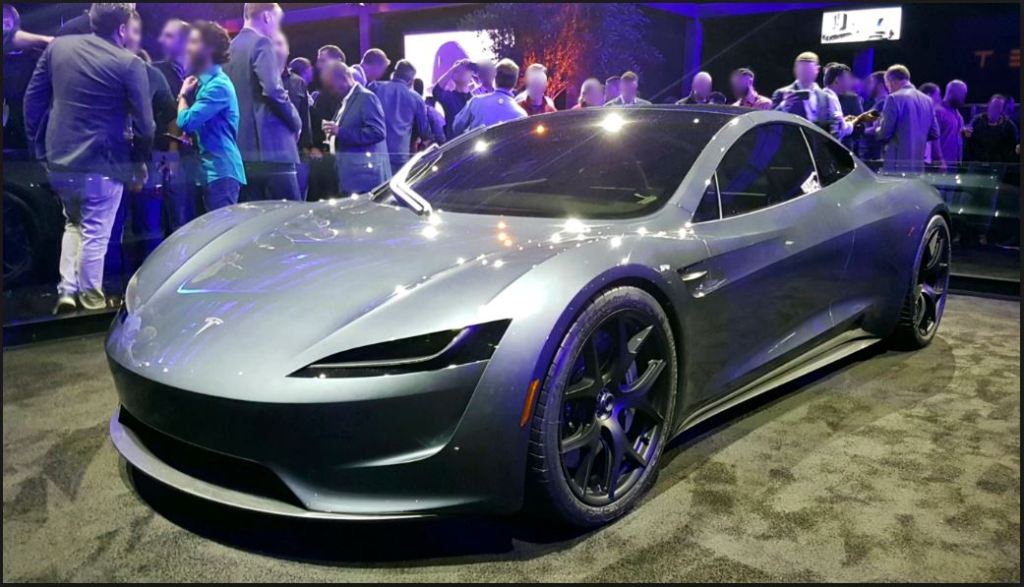
Post Picture from Wikipedia
I am sure many of us have heard of the recent news on Elon Musk’s plans to privatise Tesla with at $420 per share here. This is an interesting topic to me – privatisation. Why do companies privatise? What are their motives? What kind of value do shareholders get from such an exercise? What are the pros and cons of being a public and private company? In this post, I will attempt to make sense of these questions using Tesla and get inside the mind of Elon.
To facilitate this, I will be breaking down the post into different segments, with each segment anchored by a main question to make this analysis more structured.
- What are the pros and cons of being a public and private company?
- What are the things that are going through Elon’s mind?
- What are the implications of such an action to Tesla?
1. What are the pros and cons of being a public and private company?
Before I even go into this question, it will be important to distinguish what separates a public and private company. According to the Model Business Corporation Act (MBCA), a public company is defined as
“Public corporation means a corporation that has shares listed on a national securities exchange or regularly traded in a market maintained by one or more members of a national securities association.”
As the MBCA does not state a definition for a private company, we can define a private company as a corporation that do not have shares listed on a national securities exchange. Therefore, the main difference is that a public company has shares listed and traded on a securities exchange while a private company does not.
To guide the discussion moving forward, I have prepared a comparison table of public and private company below.
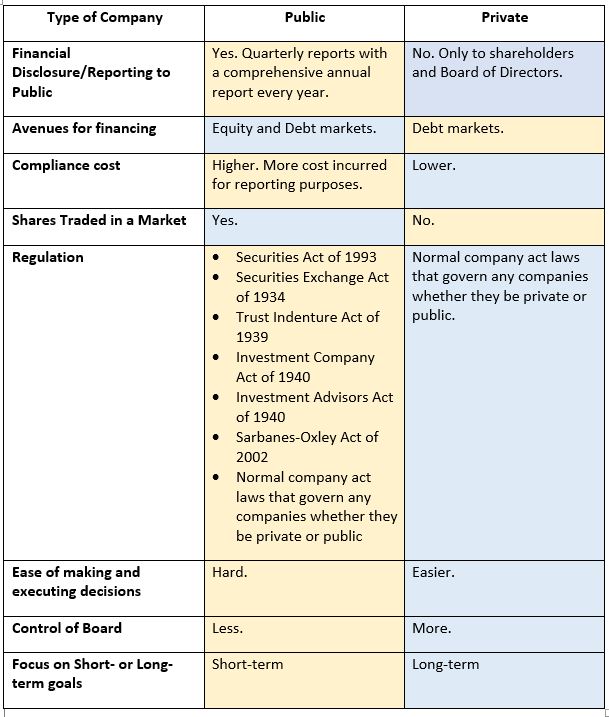
To start off, one of the main pros of being a public company is that the sources of financing is wider. A public company will have access to the equity markets in addition to the debt markets where it can then fund its growth plans for the company moving forward. Companies that go for initial public offering (going public) do it for one reason and that is to procure funds from the equity markets to fund their growth plans to add value to the company. A private company on the other hand, only has access to the debt markets (Bank loans normally) and is more limited to fund their growth plans. However, there are some downsides to going to the equity markets as the company is offering shares (read ownership) to the general public. This means a shareholder which used to have majority control over the board (running of the company), might lose control. Though companies in the States have bypassed this by having 2 class of shares, Class A and Class B. What companies do are to issue mainly Class B shares where they are structured in a way that enables investors to reap profit from the company but have limited voting rights in the Board.
To illustrate this example properly, imagine a company has 100 shares where they are divided into 20 Class A shares and 80 Class B shares. The company then structures Class B shares to be 80% of the company and 80 voting rights. Class A shares are structured at 20% of the company but with 200 voting rights (10 voting rights prescribed to each Class A shares). A singular shareholder can have control of the board while losing majority control of the company, if he or she holds mostly Class A shares.

The main downside of being a public company is that there are more requirements for financial and company disclosure to the public. A public company is required to disclose its financial reporting 4 times a year on a quarterly basis and spend bigger sums of money to comply with reporting standards and additional regulations. Investors and analysts pay a lot of attention to the quarterly reports and their views have big impacts on share price movements. The board of directors know this and because of this, they are incentivised to prioritise short term results to increase the share price movements. For a company that has a longer-term goal in mind, this might be problematic as inevitably the Board of Directors and Management will have to also please investors with results now.
However, there are 2 additional reasons in my mind why a company would want to go public. They are 1) Perfect for shareholders to cash out their investment and 2) More visibility and publicity for the company. Initial investors and shareholders view Initial Public Offering (IPO) as the perfect deal to cash out their investments. No doubt most of the proceeds goes to the company’s growth plans but a portion of them also goes to shareholders who sold their shares. Being a public company also means that investors have a better view of the company and would be able to give an accurate and fair valuation.
2. What are the things that are going through Elon’s mind?
I will be basing this question on the email that Elon sent out on 7 Aug 2018 here.
To tie this question to the previous question, Elon attribute the privatisation exercise due to 1) major distraction of share price movements to the employees (they are also shareholders), 2) Enormous pressure on Tesla during quarterly earnings cycle 3) Large number of short positions on the company. Let’s go through this one by one and see the rationale behind them.
Major distraction of share price movements to the employees (they are also shareholders)
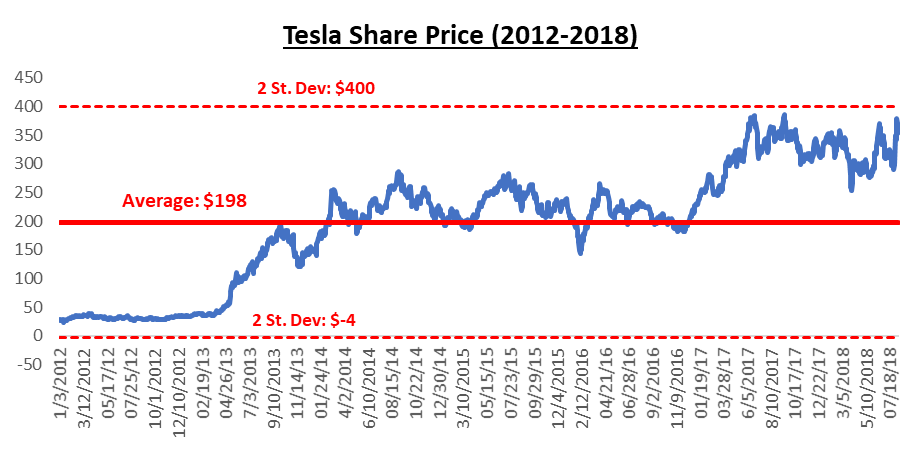
This is what I understand from this point. Employees who hold shares of Tesla obviously are concerned about the share price of Tesla particularly decline in share prices. Looking at the historical price of Tesla from 2012, it’s not hard to see why. Tesla averaged $198 with a standard deviation of $101 (you read that right), indicating that the share price is quite volatile.
Source: WSJ
Yes, the share price is variable but look at the upward movement of the share price. In the year 2012, it averaged only $31 but subsequently climbed to an average of $318 in 2018, representing a 47% CAGR growth annually. In this context, if I am an employee that got in early, just based on this, I won’t be distracted as I know the share price performance has been strong. However, to be fair, this relates back to the 3rd point that there is a strong short position for Tesla, and I would be worried about that.
Enormous pressure on Tesla during quarterly earnings cycle
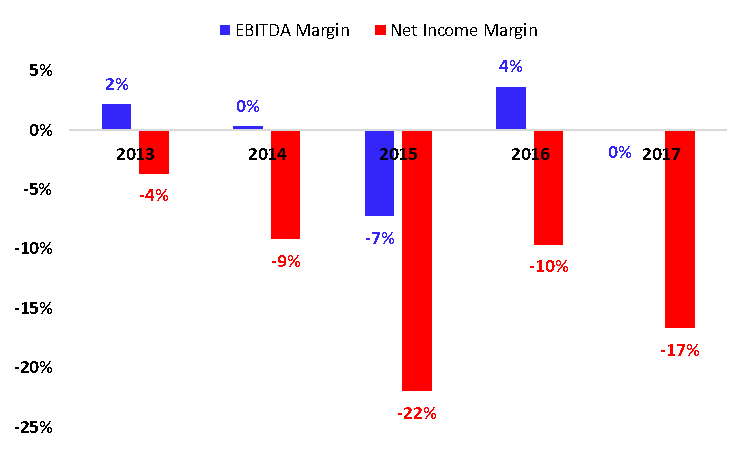
I do understand the pressure that is there for Tesla. Let’s face it, if you look at the financial margins below, you would not want to go anywhere near this company. However, this is Tesla we are talking about and revenue is still growing strongly though of course cost is just growing much faster.
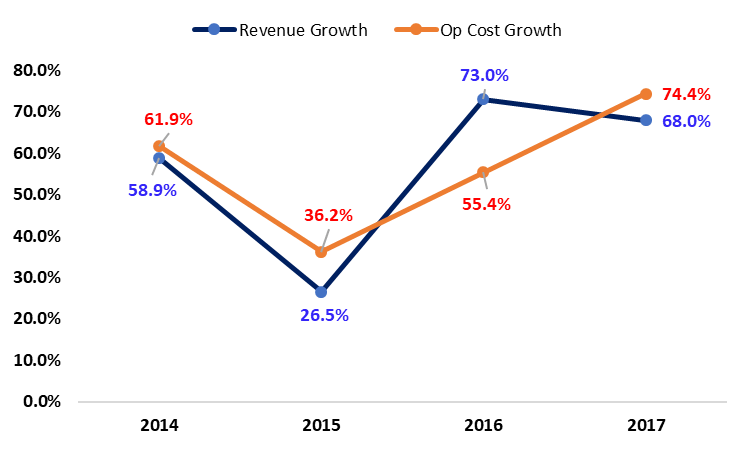 Source: WSJ
When I looked at it from the perspective of the quarterly reports and the reaction of share prices to the results, there doesn’t seem to be a lot of evidence that suggest that share price react negatively to the quarterly results. I identified the date that the quarterly results were released and examined the share price 5 days after the publication and found mixed results from it. When net income deteriorated further in 3Q 2017 and 4Q 2017, there was a decline in share price (-4.7%, -6.2%). However, it is a different case in 1Q 18 and 2Q 18, when share price improved by 0.3% and 26.2% respectively.
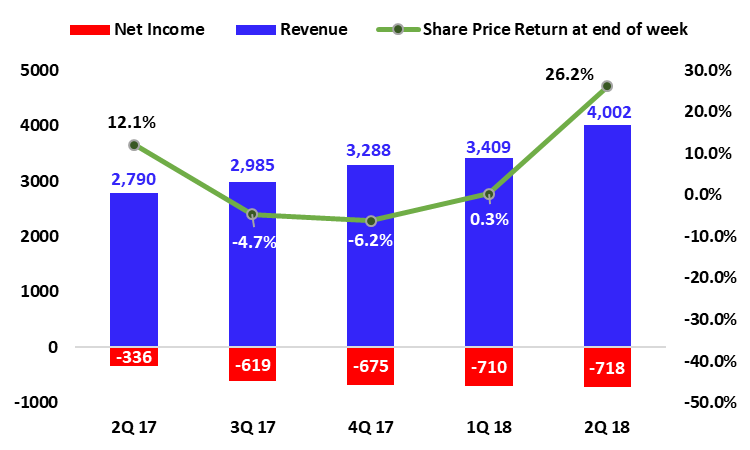 Source: WSJ
However, I do see what investors in Tesla are worried about. The company has not been making a profit all this while and investors are starting to get nervous when will Tesla turn profitable in its venture. This can be tied back to the point on public companies sometimes preferring short term results against long-term goals to keep its investors invested in it. It’s probably the case that Elon does not want short-term pressures to hamper its long-term goal (to accelerate the world’s transition into sustainable energy). The privatisation exercise can help ease pressure off from performing every quarter and instead focus on growing revenue and market share while leaving the task of rationalising its cost after gaining enough market share
Large number of short positions on the company.
In examining the short interest position published by Nasdaq for every 2 weeks, the % of short positions to floated shares has indeed increase from 21% in Sep 2017 to a peak of 31% in Apr 2018 and is now currently at 27%. Its total value shorted of $12.2bn is the highest in the United States and second only to Alibaba ($24.3bn) (Source: Reuters)
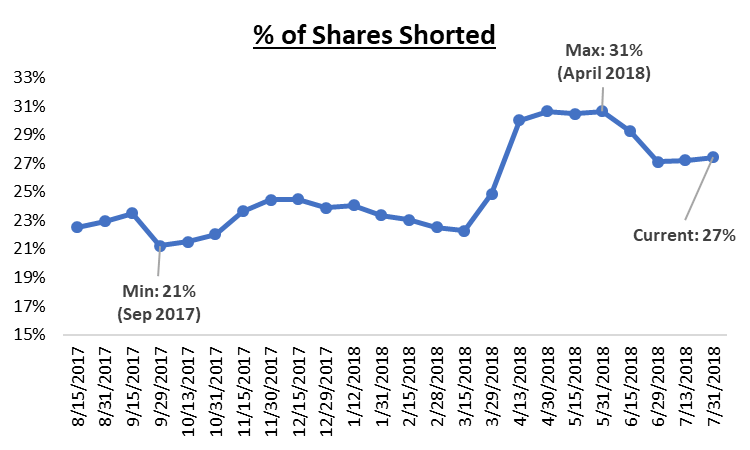 Source: Nasdaq
I can see why Tesla is heavily shorted just based purely on its poor financials. However, the way I see it, it is to be expected that the financials will be poor, and it will take some time before it is profitable. Tesla is focused on garnering enough revenue and market share first before thinking about profitability but there is a side of the investors whom are not confident that Elon can get Tesla to profitability in time (or rather before they lose patience).
3. What are the implications of privatisation to Tesla?
Well, for one, Elon’s going to need a lot of funding to buy back the 127.5m shares that were floated to the public representing 75% of its shares outstanding (170.59m). This represents about $43.4bn ($340 per share) of funding required to formally privatise Tesla. What Elon is offering is $420 per share which comes up to about 23.5% premium but will only apply to Tesla shareholders that do not remain after the company goes private. The funding source was identified as equity as Elon has said this will not be a leveraged buyout which could burden Tesla moving forward.
The first thing that I took note, was this will be an equity-based transaction. It will not affect the liabilities portion of it and not increase the interest. I have no idea what is the percentage of shareholders that will take up the $420 per share offer after privatisation so I am not going to take that into account. I will focus on the $43.4bn required to privatise Tesla.
This is quite straightforward, at least to me. If the whole of $43.4bn is funded by PIF (Saudi Arabia sovereign wealth fund), this will be a transfer of ownership of shares to the PIF fund. Reports have indicated that PIF currently holds 5% of Tesla which comes up to 8.5m shares (Shares outstanding: 170.6m). If PIF purchases the whole 127.5m shares floated, their effective stake would now be close to 80% in Tesla. That’s right, we would see PIF becoming the biggest shareholder in Tesla but I can foresee that Elon will still have control of the Board to determine its direction since it might be the case that Elon holds more class A shares with more voting rights.
Some of the benefits Tesla might gain from this privatisation is that its management and employees can now focus more on achieving its long-term goals rather than short term results that please investors. There will be less burden on financial reporting and regulation and more resources can be channelled to improving its operations. All this would inevitably have to lead to a higher value for Tesla where resources can be allocated more efficiently. However, this means that Tesla will now only have the debt markets as their source of financing and cash flow management would need to be more prudent to ensure there are no working capital shortfalls.
 Slice of P.I.E