

Hi guys, I have updated the full analysis of Kuala Lumpur Kepong for 2018. You can find my past full analysis here and my excel file Kuala Lumpur Kepong Model v16.
I hope you find this useful for your own investing purpose.
Disclaimer: The article represents mine and my view/opinion alone and does not represent any other companies’ or the company I am working. This is an independent project for informational/research purposes and I do not have any trading position in the company below.
Executive Summary (Call: SELL, TP: RM22.18)
A SELL call for Kuala Lumpur Kepong with a Target Price of RM22.18. This target price is lower than analyst’s TP of RM24.5 because
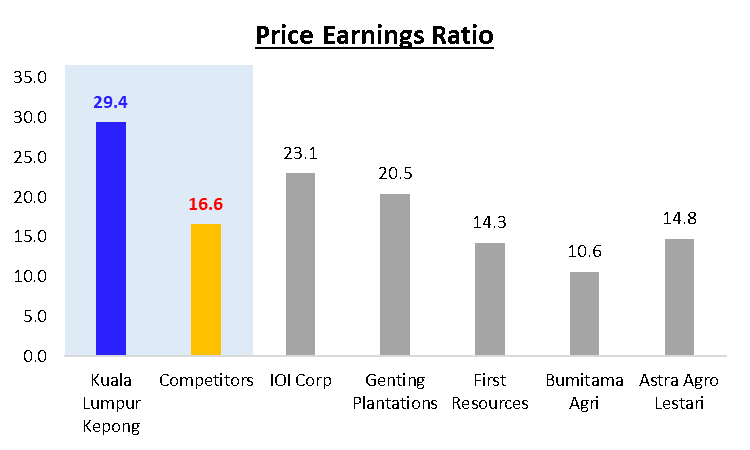
- I am less bullish of KLK’s prospects in the current macroeconomic environment and think its overvalued at P/E of 29.4 compared to its peers at 16.6.
- KLK’s operational margins have been on a downward trend, though revenue growth has been strong.
Background
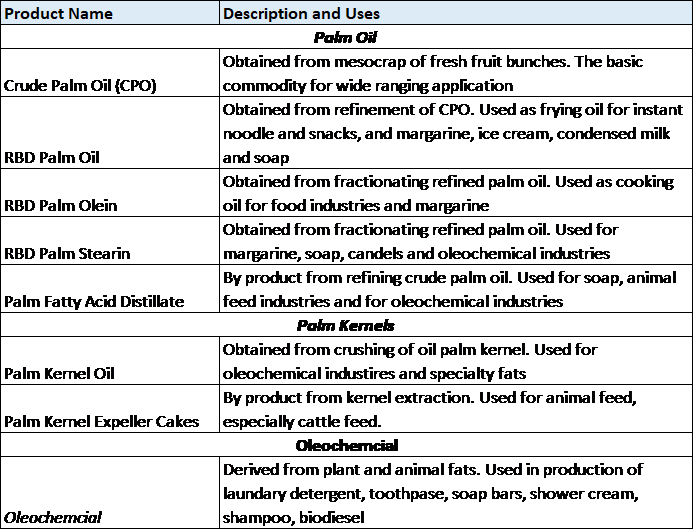
Kuala Lumpur Kepong is a palm oil company involved in the trading and manufacturing of palm oil and oleochemicals (please see below for a brief description of oleochemicals). KLK primarily produces palm oil, palm kernel and oleochemical materials in the forms and uses described below.
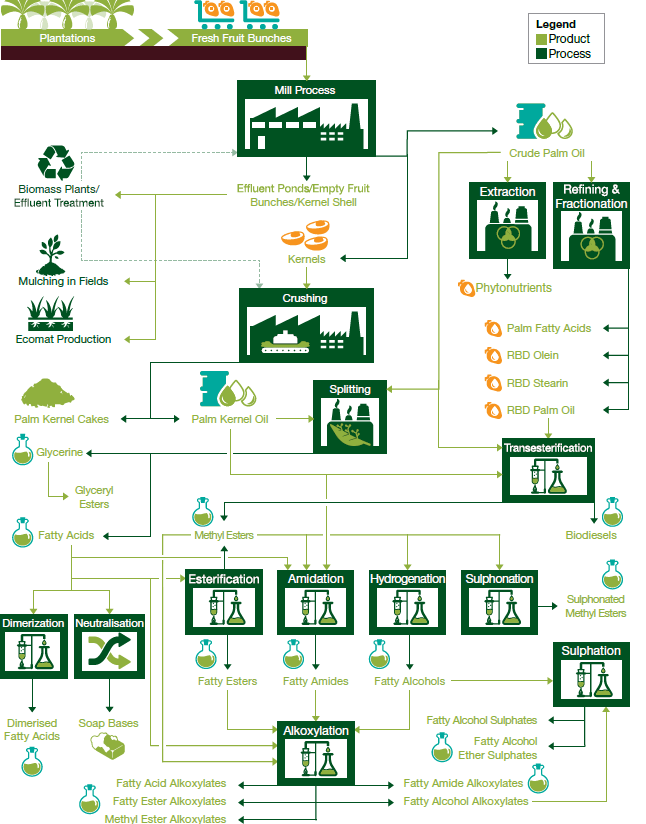
KLK operates mainly in the upstream and midstream portion of the palm oil value chain, involved in producing, refining and selling palm oil produces and products to customers. Many of its products are intermediary inputs for its customers to produce final goods and bring them to the end market (consumers). KLK is not heavily involved in the selling and distribution (downstream business) of its palm oil products. Please refer to this dissertation here by Siti Rahyla Rahmat page 58-59 for a flow chart of the Malaysian Palm Oil value chain.
Market Valuation and Share Price Performance
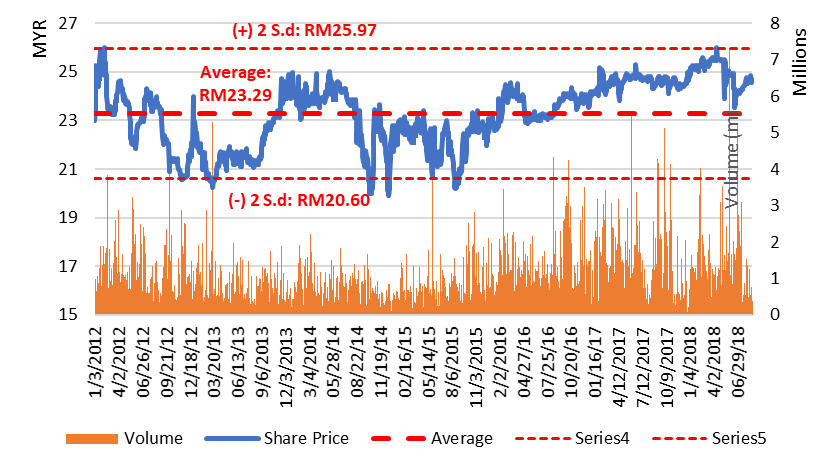
KLK consistently trades at the range of RM20 to RM26 over the past 5 years, with an average price of RM23.29 and relatively low volatility of RM1.34. If you are an investor looking for a stable stock price to invest in, this seems like the one for you. However, In the last 2 years, stock price has been consistently above its average and currently has a high P/E ratio of 29.44, which indicates a possible overvaluation.
Source: WSJ
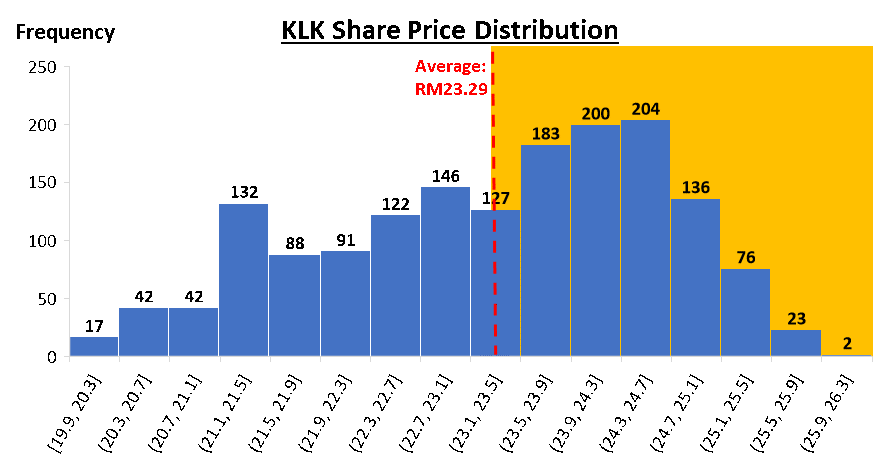
KLK’s share price distribution indicates that share price is skewed towards the right, into the higher range of prices, which presents an interesting investment opportunity. For investors aiming to enter KLK at the right time, it is advisable to enter when share price dips below RM23.29 as share prices are mostly above average. However, that will be hard as recent share price has performed above average the last 2 years.
Source: WSJ
In comparing KLK to its competitors, its price earnings ratio ranks the highest at 29.4 times, dwarfing its competitors who averaged 16.6 times. Its dividend yield (2.0%) is not that spectacular when compared to its competitors (2.2%) but the yield is low because of its high share price (Dividend/ Current Share Price). There are evidences of overvaluation of KLK in this regard but will need to be interpreted with context to KLK’s numbers and prospects.
Source: Bloomberg
Financials and Operations
Looking at KLK’s financials and operations, there are a few things we must take note of.
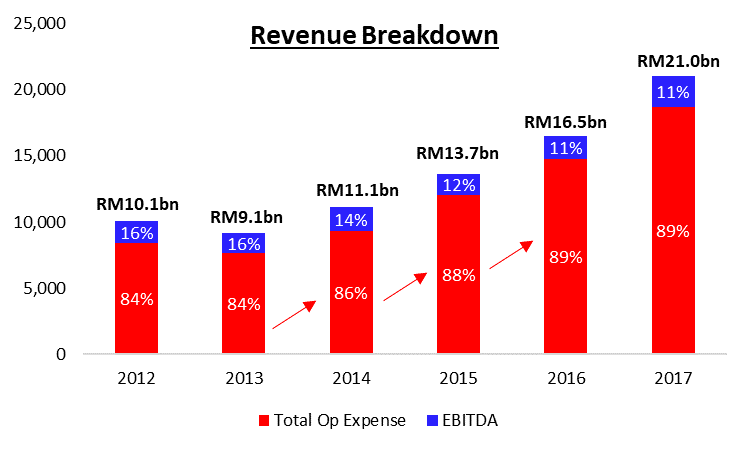
- Revenue growth has been strong, but so is operating expense growth. Revenue grew on an annualised basis of 15.8% every year from 2012, but total operating expense grew even stronger at 17.3% per year. EBITDA margins have declined from 16% in 2012 to 11% in 2017, with total operating expense now encompassing 89% of revenue (2012: 84%).
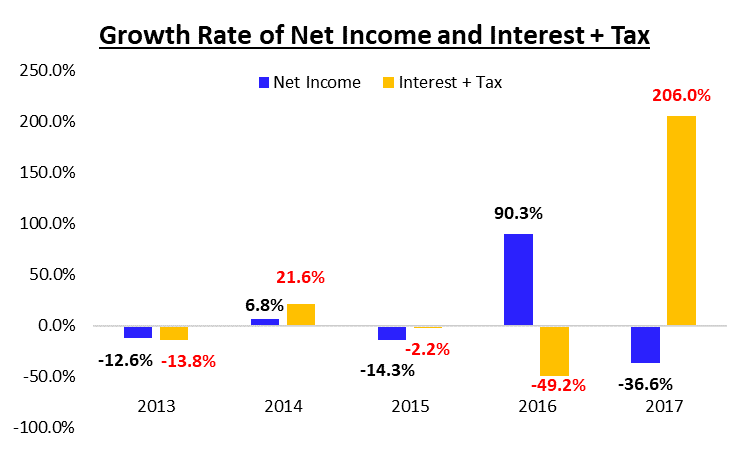
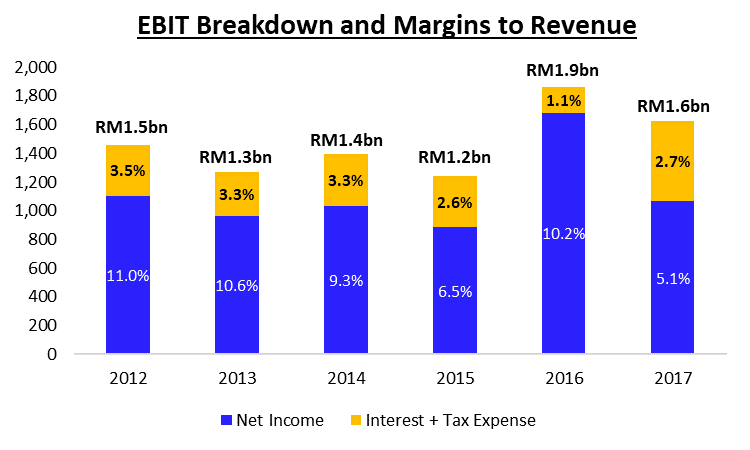
- Net income growth has been very volatile over the years. Net income growth’s standard deviation is at 44.0%, switching back and forth from growth and decline. The volatility stems from both interest and tax expense component. As a result, its net income margin is also variable, ranging from 11.0% in 2012 to as low as 5.1% in 2017.
Source: WSJ
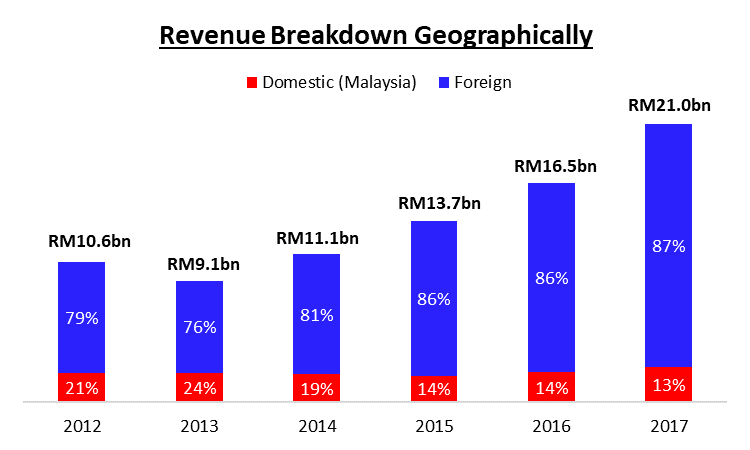
- Geographically, its sources of revenue are from foreign countries (87%), while only 13% are from domestic source. Foreign countries include Far East (23%), Southeast Asia (27%) and Europe (22%). Revenue from foreign countries have come to encompass a larger share of KLK’s revenue, growing from 79% (RM8.4bn) in 2012 to 87% (RM18.3bn) in 2017. This will be an important point to consider as the prospects for KLK will have to be heavily weighted by international happenings and events.
Source: Annual Report 2016
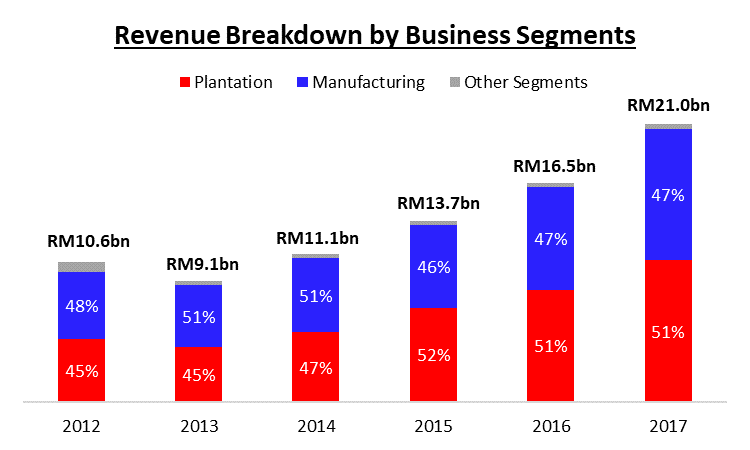
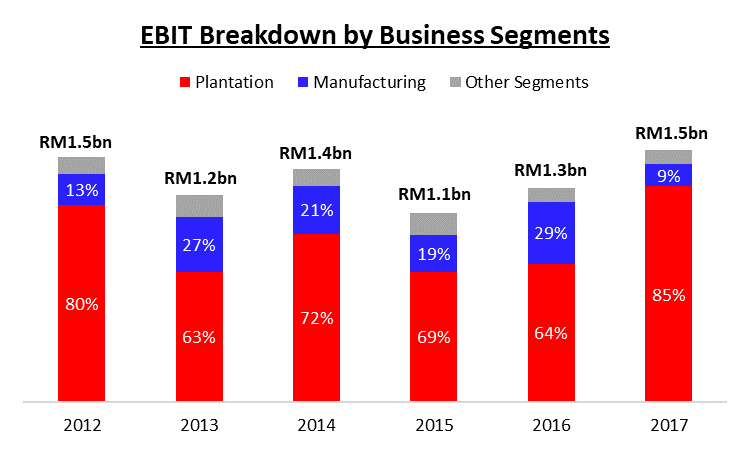
- KLK has 2 main core business in plantation (Palm oil, rubber) and manufacturing, with each business comprising 51% and 47% of revenue respectively. From an EBIT point of view, plantation business comprises the highest percentage of GP at 85% while Manufacturing makes up 9% only. As such, the EBIT margin for the Plantation business is significantly higher at 12% compared to 1% for Manufacturing.
Source: Annual Report 2016
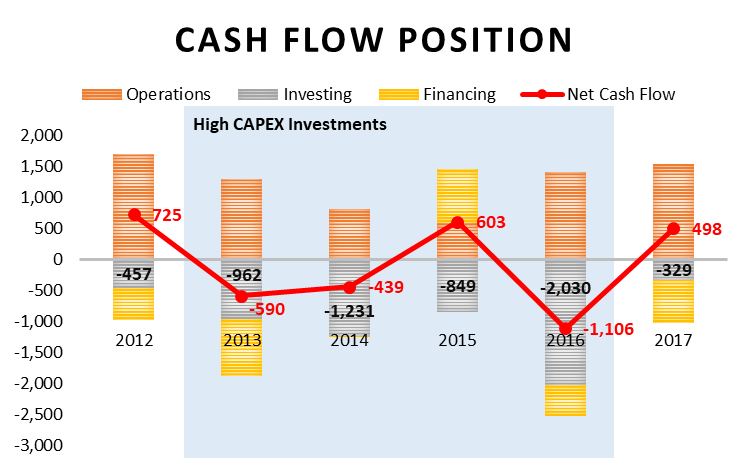
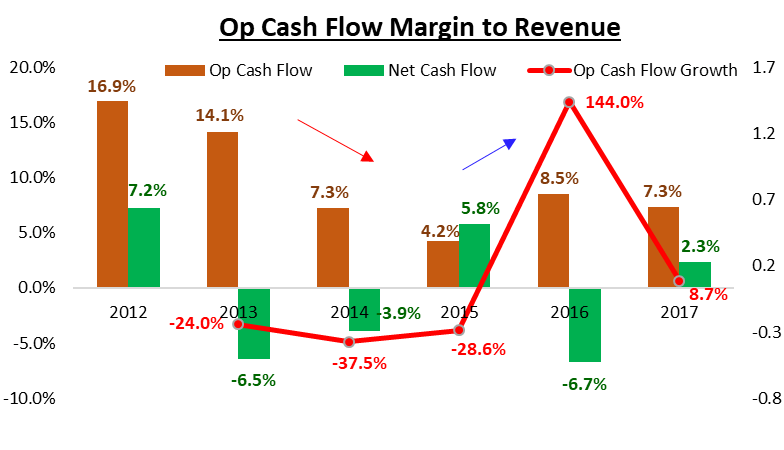
From the cash flows perspective, KLK has had a high period of CAPEX investments from 2013 to 2016, resulting in net cash flows being negative. In 2017, its CAPEX investments have reduced to RM329m from its high in 2016 (RM2.0bn), resulting in a positive net cash flow of +RM498m. The large CAPEX investments are expected to improve operational cash flows in the future, which should lead to positive nest cash flows.
Source: WSJ
From a larger point of view however, Operational Cash Flow growth has been poor except for 2016 (+144%) and 2017 (+8.7%). Operational Cash Flow margins have been on a decline from 2012 (16.9%) to 2015 (4.2%), before recovering to 7.3% in 2017. The current trend of growth in operational cash flow is encouraging, but the trend must be sustained moving forward, with current operational cash flow margins improving also.
Source: WSJ
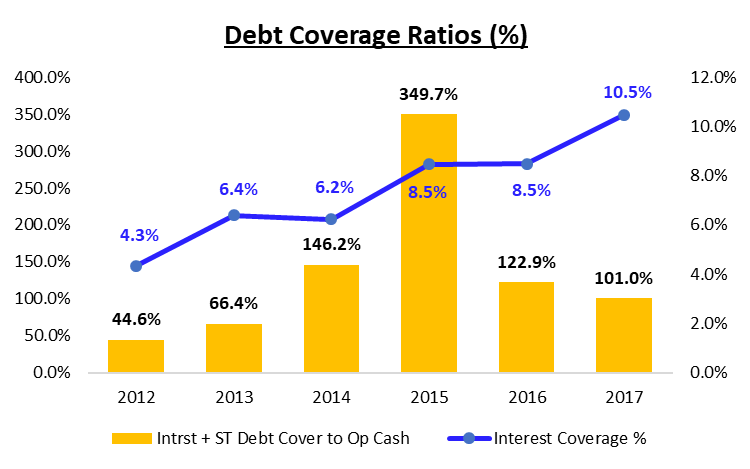
In terms of KLK debt analysis, its interest coverage ratio (Interest/ EBIT) has almost tripled from 4.3% in 2012 to 10.5% in 2017, with interest expense also tripling from RM63m in 2012 to RM170m in 2017. Its ability to repay its interest and debt obligations (Interest + ST Debt / Operational Cash Flow) has also been deteriorating from 2012 (44.6%) to 2015 (349.7%) but recovering in 2017 (101.0%). However, the percentage that is above 100% indicates that KLK’s operational cash flows are not enough to repay its short-term debt obligations.
Source: WSJ
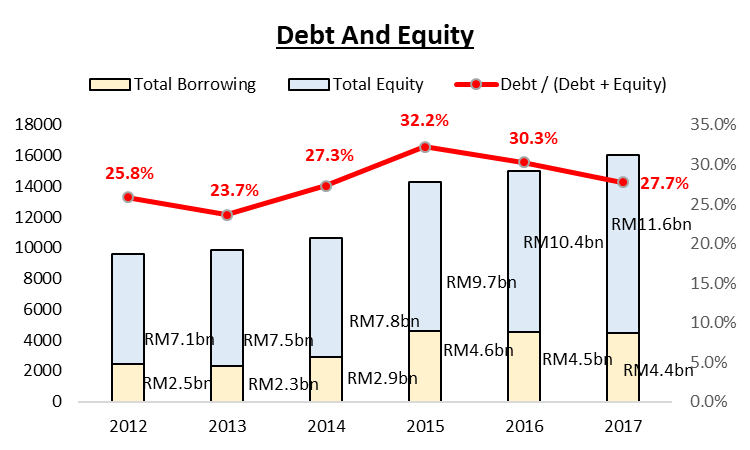
Although there are some concerns over KLK’s ability to cover its short-term obligations, its leverage structure seems to be in order. Its leverage ratio (Debt / (Debt + Equity)) increased from 23.7% to 32.2% in 2015 but has seen decreased to 27.7% in 2017. There are no alarm signs yet in this regard as the Equity portion is growing healthily while borrowing has settled at the level of RM4.5bn recently.
Source: WSJ
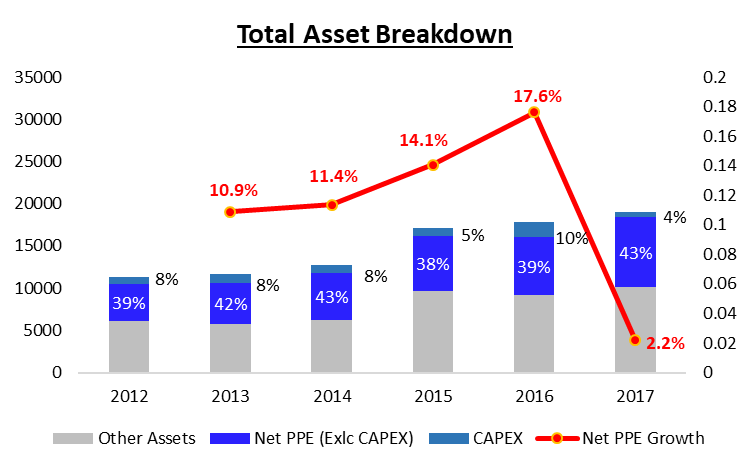
KLK remains a plantation company heavy on its PPE components with about 43%-51% contribution to KLK’s total asset and has heavy CAPEX investments (CAPEX to PPE %: 8% to 20%). KLK’s PPE has been growing strongly from 2013 to 2016 in line with its high CAPEX investments during this period but has grown modestly in 2017 (2.2%). Recall earlier in the cash flow section that 2017 was a low CAPEX year for KLK, while 2013 to 2016 was a period with high CAPEX.
Source: WSJ
As this is a company oriented heavily oriented around its assets generate revenue, it will be appropriate to examine its Returns on Assets (Net Income/ Total Assets) to gauge the efficiency of its assets. ROA has been steadily declining since 2012 (9.8%) to 2017 (5.6%), but this must be interpreted in the context of heavy CAPEX investments not having immediate effect to net income. It will probably take some time (maybe a year or two) before the assets investment matures and contribute to revenue. The year 2018 will be a litmus test (2017 CAPEX has declined) to see whether some of its assets investment lead to an improvement in net income and ROA.
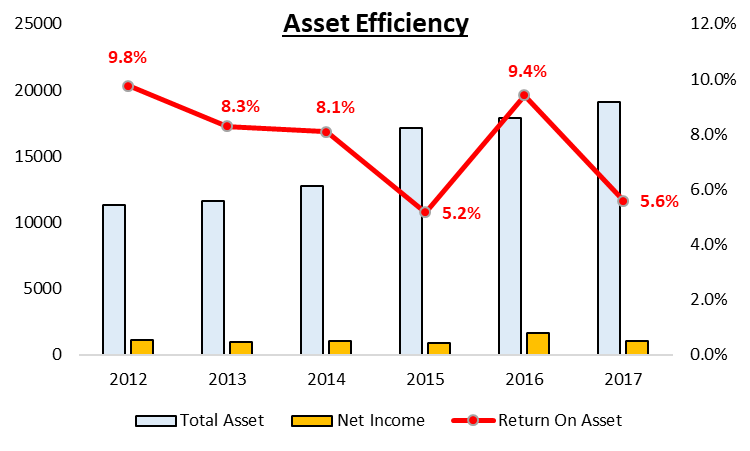
Source: WSJ
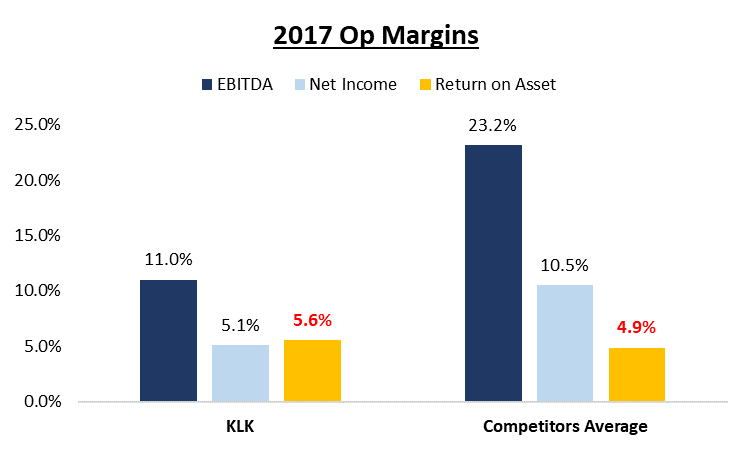
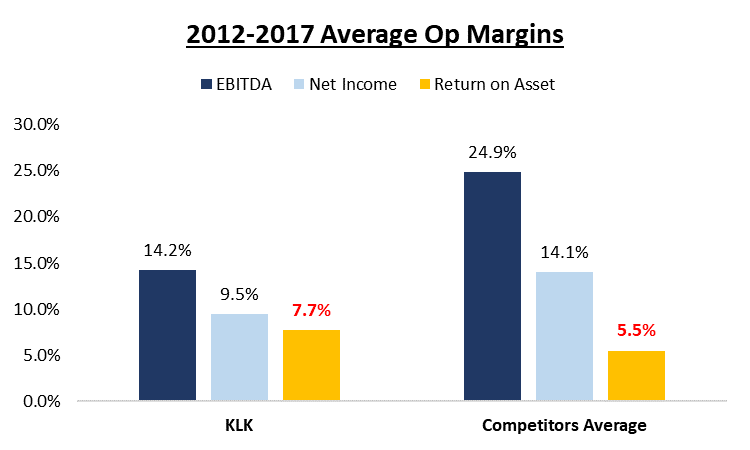
In comparison to its peers, KLK’s margins have not been impressive and are on the low side. EBITDA and Net Income margins are lower than its competitors but return on assets outperforms its peers. KLK’s operational margins need some improvement to catch up to its competitors but it is more efficient in terms of utilising its assets to generate revenue.
Source: WSJ
Macro Environment and Trends
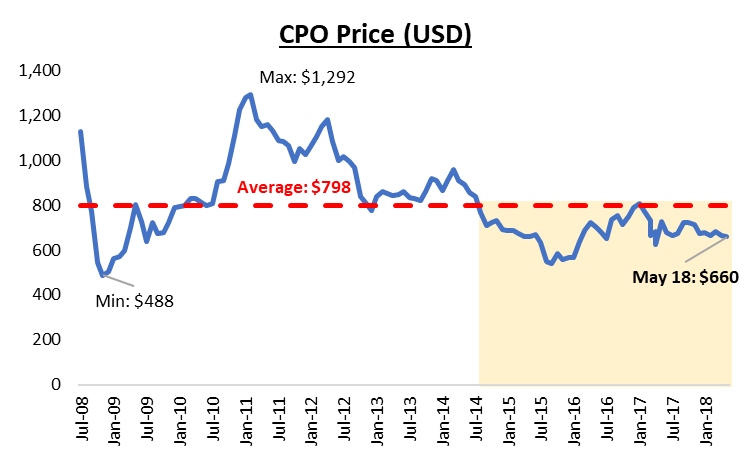
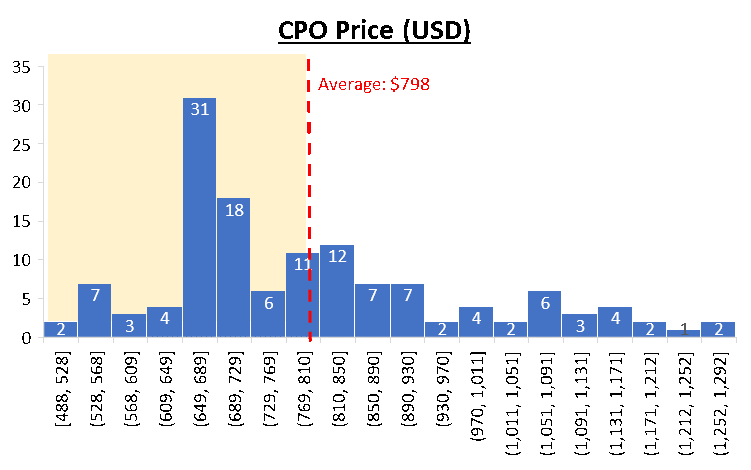
CPO prices have been depressed the last 3 years (below the average of $798) due to the El Nino effect. The boom period of 2009-2013 saw high demand for palm oil by big players like China, US, India and Europe, while the bear period after that saw concerns of low GDP growth from China and India and the increasing competitiveness of soy bean and rapeseeds. CPO prices currently do not indicate any bull case for the market as it trades mostly below average and to the lower ranges of CPO (skewed to the left side of distribution).
Source: IndexMundi
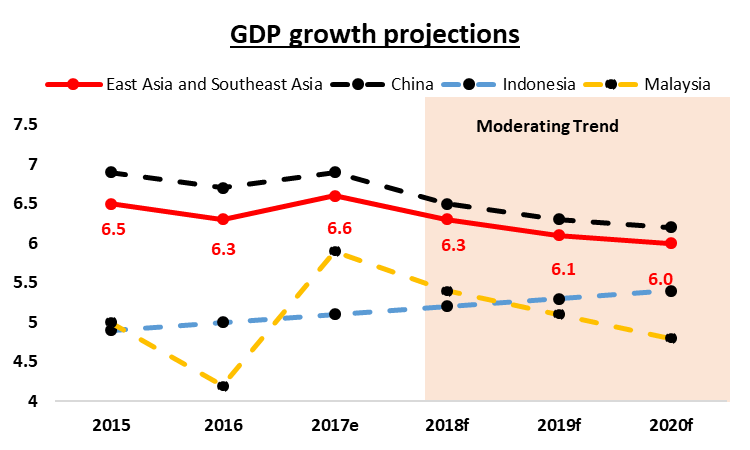
KLK’s source of revenue is highly dependent on foreign countries which include the East Asia (23%), Southeast Asia (27%), and Europe (22%). I will be analysing the GDP growth of these 3 regions, borrowing heavily on World Bank’s analysis of the prospects of these regions. The overall storyline is that most of these regions are forecasted to moderate in the coming years.
- East Asia and Southeast Asia
Asia in general will continue to be dominated by China’s growth in the future as it is the number 1 economy in the world. World Bank’s projections for the region in 2018 to 2020, indicate that growth will moderate from 2018 onwards (2017: 6.6%, 2020: 6.0%), driven by China’s moderating trend (2017: 6.9%, 2020: 6.2%). Risks to the region are concentrated to the ongoing trade wars between the US and China and will have a negative impact if the risks escalate further. There aren’t any bullish growth stories coming out, so I do not see any bull case for the region as a whole.
Source: World Bank
- Europe
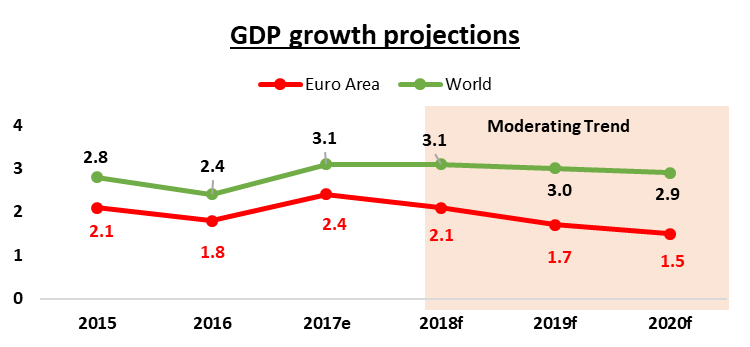
The same can be said for Europe too as there does not appear to be any bullish growth stories coming out from this region. Europe overall GPD growth is forecasted to moderate from 2018 onwards (2017: 2.4%, 2020:1.5%) because of less supportive external conditions, intensifying capacity constraints, and less accommodative fiscal and monetary policy in commodity importers.
Source: World Bank
Financial Valuation
Key Assumptions for DCF:
| Revenue Growth | 6.4% |
| EBITDA Margin | 11.0% |
| Cost of Equity | 11.10% |
| MGS 10-year | 4.03% |
| ERP (Damodaran) | 7.07% |
| Cost of Debt | 4.14% |
| Tax Rate | 24% |
| D/D+E | 28% |
| WACC | 8.9% |
| Terminal Growth | 3.0% |
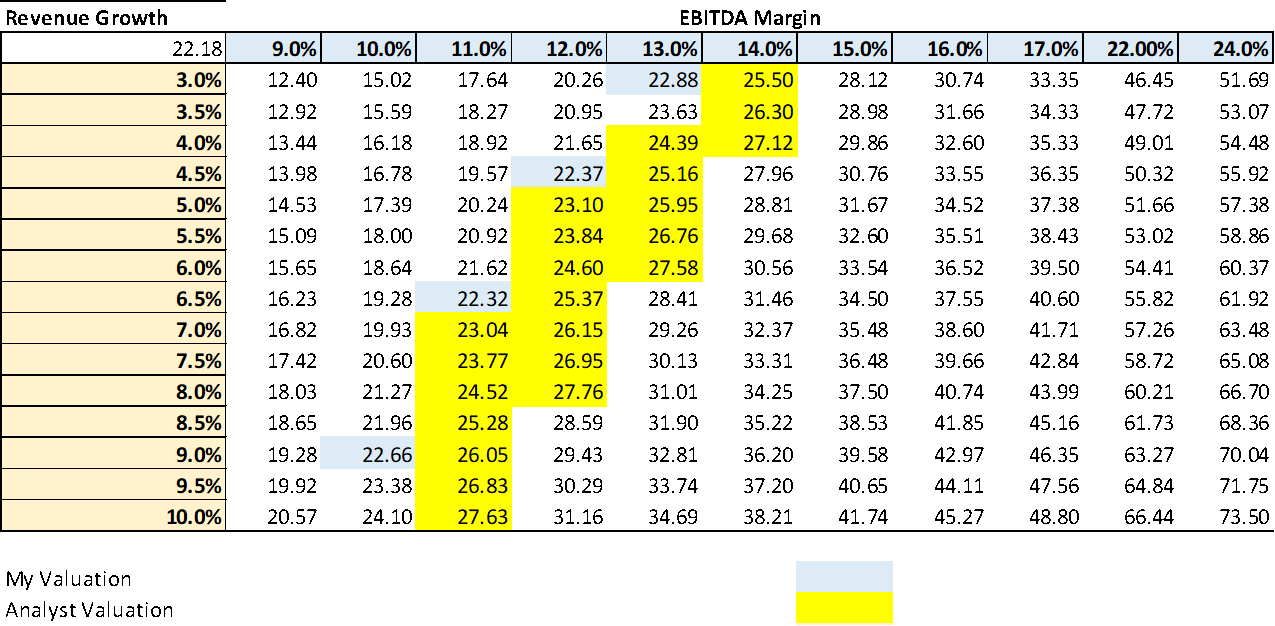
My DCF valuation yielded Equity Valuation of RM23.6bn (RM22.18 per share) with an implied P/E of 26.4. This is lower than KLK’s current Market Cap of RM26.3bn (RM24.68 per share) and P/E of 29.42. Investors seem to be pricing in a more aggressive upside for KLK while I was more conservative in projecting its revenue growth. The 2-way table below shows the valuation range by analyst and the implied revenue growth numbers and EBITDA margins. I am leaning more towards an overvaluation in this case as I don’t see a case for an abrupt increase in its operational margins or a bull case for the overall macroeconomic environment. The P/E comparison earlier also indicate KLK is more likely to be overvalued at a P/E of 29.4 compared to its peers’ average of 16.6.
 Slice of P.I.E