
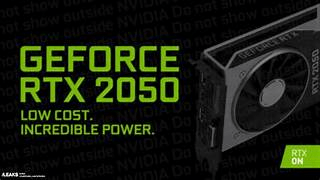
This is the picture of the Nvidia GeForce RTX 2050 that I got in 2017. Back then, I was still starting fresh in my career and got a bit of money to invest in a personal computer (PC).
I budgeted about RM3,000 and I am still using that PC today. Now, Nvidia GeForce RTX has progressed to the 30- and 40-series leaving me severely behind on the graphics card trend.
In its recent first quarter financial results announcement, it managed to beat expectations and registered very strong financial performance.
It has now approached the US$1 trillion mark for its market capitalization – a realm reserved for the likes of Apple, Microsoft, and Alphabet.
What happened to Nvidia then? Why was its financial performance so strong? What drove it? Here are 5 key takeaways that you should know about Nvidia!
#1 Nvdia’s share price rose sharply for 2023, driving it to near US$1 trillion
Guess how much Nvidia’s share price went up? 174.5% since the beginning of the year. Wow, that is just bonkers considering that Nasdaq only went up by around 20%.
Most of its share price gain came from the months of January and May 2023, where it recorded gains of 33.7% and 44.5% respectively, and now has around US$990 billion in market capitalization.
In January 2023, news of China’s economic reopening and the possibility of the U.S. slowing its interest rate hikes contributed to the gains in Nvdia’s share price.
Meanwhile, in May 2023, the stronger-than-expected (which will be explored in the next point) financial results of Nvidia led to an even stronger gain in its share price.
Here’s the crazy part. Nvidia is trading at a price-to-earnings ratio of about 200 times, higher than the industrial average of 28.0 times and even its historical average of 63.6 times.
Talk about investors being optimistic! This is nearing levels of investing mania! To reach that level of investor expectations, Nvidia’s profit would have to grow by almost 10 times its current level based on my estimation.
#2 Revenue and profit growth was strong, driven by A.I. and data center chips demand
There are two parts that we need to be aware of here for the financial performance. One pertains to the annual performance in 2023 (Feb 2022 to Feb 2023) and the second to the quarterly performance for 1Q 2024 (Feb 2023 to May 2023).
First of all, revenue growth for 2023 has been flat at a growth of 0.2% to US$27 billion. What is surprising is that profits decline by half from US$9.8 billion in 2022 to US$4.4 billion in 2023.
However, for the first quarter of 2024, profits rose by 26.3% from a year ago to US$2.0 billion. Revenue on the other hand declined by 13.2% to US$7.2 billion in 1Q 2024.
This is … confusing if you ask me. There are just so many nuances here that make it hard to analyze and understand Nvidia. On the one hand, you have profits growing strongly. But on the other, revenue is declining.
Here’s what I think investors might be thinking about Nvidia at this juncture. Its biggest revenue contribution is coming from data centers and AI-related chips now in 1Q 2024.
That segment has grown by 14% since the last year. With the big boom in A. In technologies, this stronger performance is reflective of the start of a boom in the demand for A.I.-related chips globally.
Investors are looking past the lower revenue performance from the other segments (except automotive) as they view them to be at the end of their current technology cycle.
The next technology cycle will be focused on A.I., data centers, and automotive segments which will be discussed in more depth in the next point.
#3 The technology cycle is near the start of another uptrend
If there is one thing to understand about technology cycles, it is that demand will come from different segments every time a new one comes into play.
The last technology cycle which in my opinion started from the proliferation of smartphones, it reached its peak in the mid-and late-2020s before the pandemic.
I think that this cycle came to an end already in 2021 and 2022 with the Fed’s interest rate hikes leading to a significant decline in share prices of many tech companies globally.
With the start of 2023, two major trends have emerged. One, A.I. technologies such as ChatGPT became more in demand. Two, the global electric vehicle segment became more commercial.
Nvidia seems pretty well-prepared to embrace this next trend in positioning itself in these segments. The next point will explain how it can quickly ramp up production to possibly gain market share.
#4 Market has Nvidia at a BUY call
The market currently has Nvidia at a STRONG BUY call and an average target price of US$450. This implies an upside of about 13.8%.
As mentioned previously, Nvidia is currently trading at a price-to-earnings (PE) ratio of about 200 times. The current average target price of US$429 implies a PE ratio of 222 times.
When you look at it like this, the valuation seems out of whack. Before February 2023, most of the target price was hovering in the range of US$100 to US$200.
This represents a two-fold increase in target price in just 2 months. However, some context is important here in the next point.
#5 Valuations do seem high but investors are expecting four times the current profit
In 2021, Nvidia makes twice the profit at US$9.8 billion. If we take the earnings per share back then of US$3.85 per share, the PE ratio is equivalent to 111 times.
If we take the industry’s average PE ratio of 28 times, this means investors are expecting close to four times the annual profit of 2021 to be generated in the future.
Now, is that possible? Let’s do the math. The average profit margin was 27.9% from 2019 to 2023, and investors expect profit to increase by four-fold to about US$40 billion annually.
If I extrapolate the revenue, this will equate to about US$143.4 billion of revenue per year in the future. For comparison, both Apple and Microsoft make about US$400 billion and US$200 billion in revenue annually.
Here’s a rough calculation of how much Nvidia would need to grow annually for 5 and 10 years to reach that revenue level.
- 5 years: 39.6% annually
- 10 years: 18.2% annually
The thing is – revenue grew by 52.7% and 61.4% respectively in 2021 and 2022. It could be the case that Nvidia can register these strong growth rates in the coming years.
This could be possible. Two main growth stories for Nvidia involve the higher demand coming from the data center (A.I.) and automotive segments.
- The global artificial intelligence market is projected to expand by 37.3% annually from 2023 to 2030.
- The electric vehicle market is projected to grow by 17.3% annually from 2023 to 2030.
The question now is whether Nvidia could grow in line with the overall market projections, and capture substantial market shares in the meantime.
Conclusion
Nvidia’s sharp share price rise has some fundamental backings behind it. The increase in demand for A.I. and electric vehicle segments could bring about better financial performance. However, we need to be wary about the potential investors’ mania that is happening right now for A.I.-related stocks as it seems eerily similar to the previous manias during the pandemic (glove, healthcare, and wallstreetbets)
 Slice of P.I.E