
Abang Jo is in the works of establishing a local boutique airline to stabilise airfares to and from Sarawak. Not many details are available yet regarding this as Abang Jo said in his words,
“The model for the boutique airline will be a different model. It is a business model. I cannot reveal now because it is mine.”
Regardless, here are the 7 things that you need to know about the plan to have the airline!
#1 To Be Operated by Hornbill Skyways and Not Profit-Oriented
The boutique airlines will be operated by Hornbill Skyways Sdn Bhd (Hornbill). Hornbill has been in operation in Sarawak since 1977, and is headquartered in Kuching.
It has two main hubs in Kuching and Miri Airport and mainly serves the small-scale local flight market in Sarawak.
Hornbill is a state-owned entity, through Yayasan Sarawak and Sarawak Timber Industry Development Corporation, and is envisioned to operate an airline business that is aimed at stabilising flight prices and not profit-oriented.
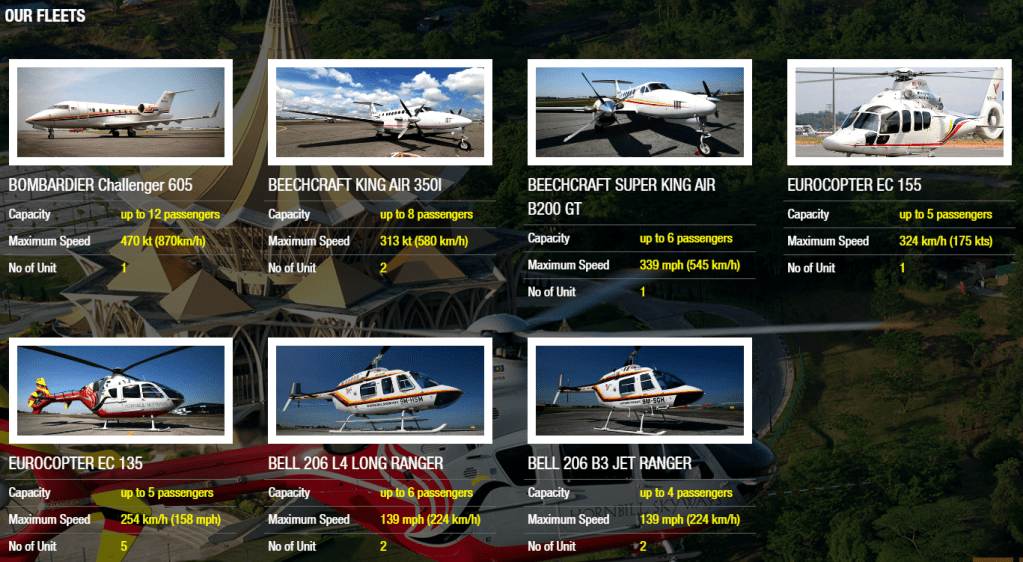
Currently, Hornbill operates both helicopters and small aircrafts for its business.
#2 Starting Off with 4 Turboprop Planes
The idea of a local boutique airline is not new. Abang Jo first muted this idea back in December 2021, where he envisioned that flights will be chartered to Kuala Lumpur, Singapore, Thailand, Indonesia and Hong Kong.
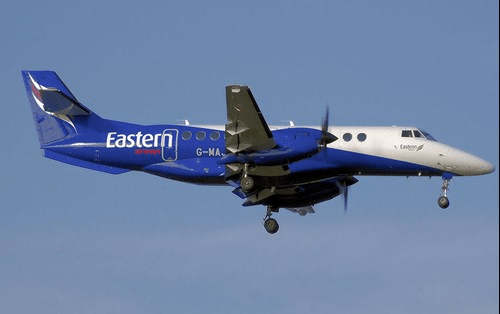
Based on preliminary details, the initial plan is to procure 4 turbo-prop aircraft planes with 120 seating capacity each. After that, they will be upgraded to jet planes.
If you have no idea how turbo-prop aircraft planes look like, here’s an example.
#3 Taking Over of MASWings to Help Build the Boutique Airlines
On 15 June 2023, the Sarawak state government agreed in principle to take over MASWings in Sarawak to help set up the boutique airlines. For a bit of context, the state government tried to take over MASWings in 2012, 2015 and 2017 respectively.
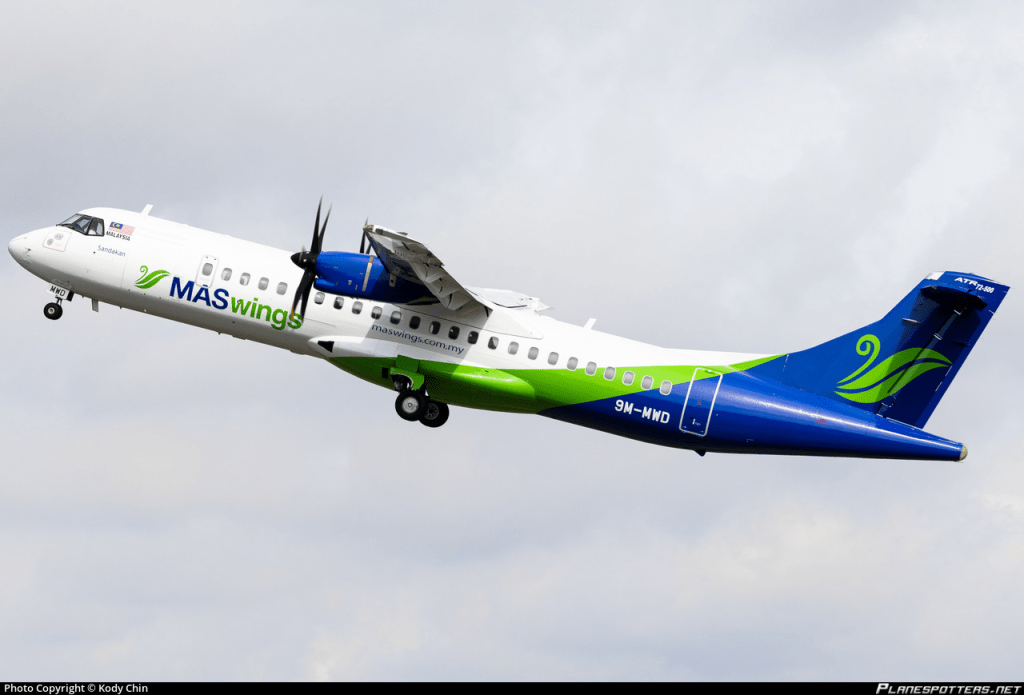
If you don’t know, MASWings mainly operate small-scale flights in Sarawak and Sabah, and connects the rural areas in both states. It also flies to Brunei, Indonesia and the Philippines.
It is currently owned by Malaysian Airlines, and the taking over by the Sarawak state government is expected to kickstart the process of acquiring the turboprop aircrafts.
Currently, MASWings operate 10 64-seater ATR72-500 aircrafts, which are turboprop in nature and the boutique airlines could instead use these aircrafts instead to fulfill the 480 seat capacities.
#4 The Airline Obtained Approval-In-Principle from Anwar
So far, Prime Minister Anwar Ibrahim has given his approval-in-principle for the establishment of the boutique airline, while the Ministry of Transport has also welcomed Sarawak’s proposal but cited that the application remains incomplete at the current stage.
Aside from that, there are still at least 2 layers of approval, with the airlines needing to obtain an air service license from Mavcom and an air operator’s certificate from the Civil Aviation Authority of Malaysia.
It is unsure yet on how long this process will take but the state government has indicated that it can start operations once it acquired the 4 turboprop aircrafts.
At this stage, the MASWings takeover by the state government is underway (in principal). Based on the experience of MYAirlines, the approval process could take as long as 1.5 years.
If the boutique airline could complete its takeover of MASWings promptly and obtained the approval, we could be seeing it being operational by the end of next year.
#5 Main Competition from MAS, Air Asia and even MYAirline
The boutique airline will face stiff competition from Malaysia Airlines and Air Asia in the Sarawak and Sabah markets. Even the newly established low-cost MYAirline will be competing.
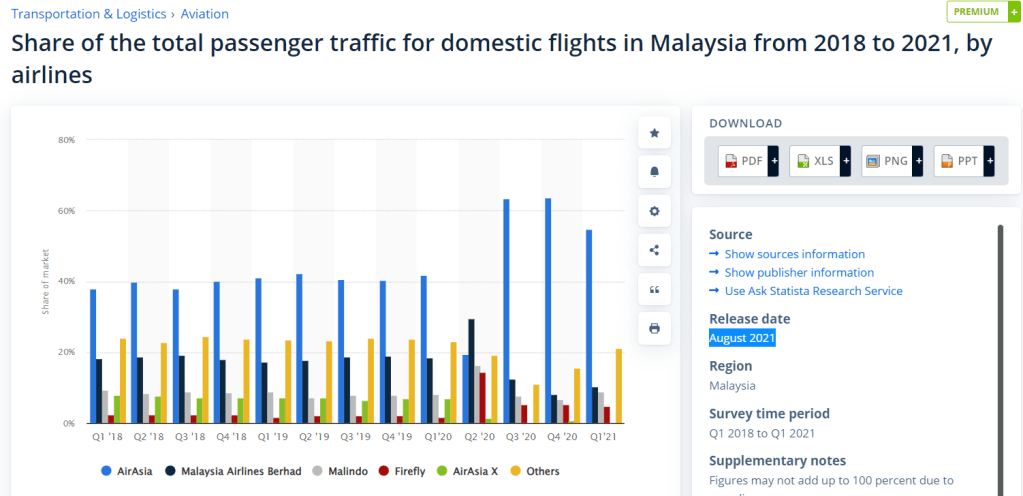
Based on latest data from Statista for 2021, Air Asia still dominate the Malaysian market at 54.8% followed by Malaysia Airlines at 10.4%.
Sarawak state government really has its work cut out for them if that’s the case.
#6 Airline Prices have been Volatile for Sarawakians
The thing is airline fares for Sarawakians have been expensive and volatile over the years. At one point, flight tickets from KL to Kuching cost as much as RM1,000.
For a bit of economics, air ticket prices are subject to the supply and demand of air flights. If there are more demand such as during elections and festive seasons, prices generally rise. If there is less supply such as the lack of flights during the pandemic, prices also rise as there are only limited seats for everyone.
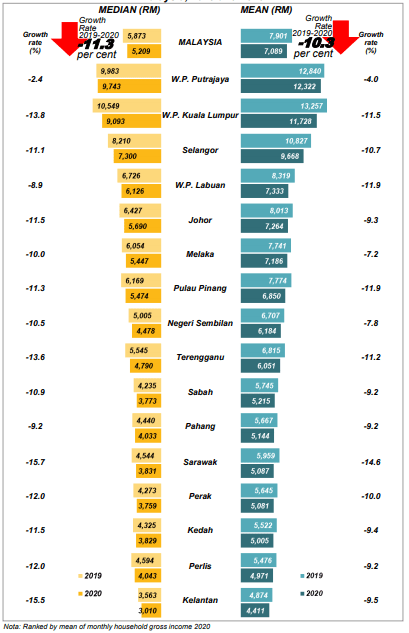
High airfares have been a constant complaint from Sarawakians looking to travel to and fro from Sarawak. It doesn’t help also that Sarawakians have one of the lowest income per household in Malaysia at RM3,831 compared to the national average of RM5,209.
Hence, the Sarawak state government has an incentive to stabilise air fare prices for Sarawakians but I fear that such a move could instead increase the tax burden for most if the airline is not ran properly.
#7 Many Sarawakians Rely on Air Flights
In 2019, there was a total of 11.5 million passengers that were handled by Sarawak airports, which makes up about 13% of total passengers in Malaysia airports. This makes it one of the highest states by arrivals after the Klang Valley.
Pending the completion of the Pan Borneo Highway, the reliance on air flights in Sarawak will continue to be significant.
Sarawakians in the rural areas normally rely on MASWings to travel to bigger cities as roads are typically in bad conditions.
Maybe this is a wake-up call to both the state and federal government. The construction of basic infrastructure has long been overdue. Even the construction of Pan Borneo has taken a long time. Jokingly, some Sarawakians have called it the Pain Borneo Hellway.
Conclusion
It seems like the Sarawak state government view air fares in Sarawak as a politically sensitive issue. Though I get the nagging feeling that this is masking some fundamental problems that the state has in regards to its basic infrastructure. The federal government might be at fault here considering that Sarawak notoriously have always complained about the lack of development here.
Nevertheless, a local boutique airline for Sarawak might be good for the state if it’s operated well and doesn’t require bailouts from both the state and federal government.
 Slice of P.I.E