
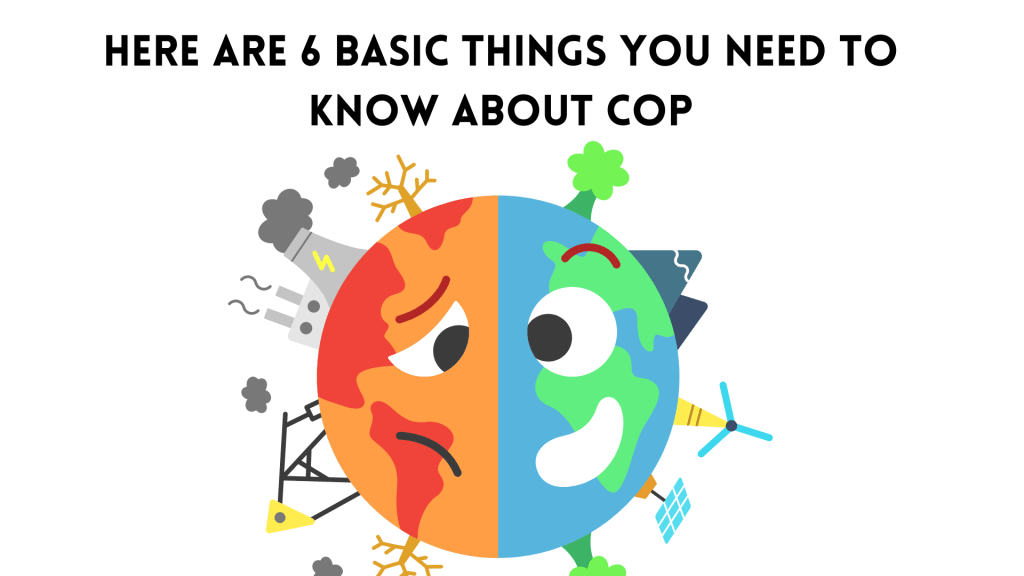
It is basically a roundtable discussion for all countries in matters related to climate change. (All Sources: COP28)
If you like this content, consider subscribing to the website, or follow my LinkedIn and Medium.
Why this is useful for you: COPs are in-depth discussions on climate change worldwide. Few people know how it relates to them. This article details the basic facts about COP, and how they relate to you.
COP stands for UN Climate Change Conferences and has been held yearly since 1995. Almost every country attends it, and they come together to discuss climate-related matters. Every country will have their agenda for it, as everyone comes from a different context. But here are the general facts about it that you can get to know about.
The ultimate aim is to limit global temperature rise to 1.5 Celcius (C):
From 2011 to 2020, global temperatures have risen by 1.1 C above 1850-1990 levels. Higher temperatures could cause higher sea levels and more erratic weather patterns. This will in turn lead to floods and damage to properties.
They are doing this to conserve and preserve all ecosystems:
Everyone should have basic rights to clean, healthy, and sustainable environments. Very high-level, but it means that you can live comfortably and healthily.
Every country will set out their own goals and implementation, and align with the global ones:
As mentioned, every country has their context. But there will be a global goal such as the 1.5 C stated. They will announce whether they agree with that goal and their implementation plans.
There are gaps in the progress of different countries:
It is difficult to coordinate between different countries. So, gaps will always appear. The main issue is funding as less developed countries have limited funding channels. And they have to balance them with the objectives of spurring economic growth.
COP discusses these 4 main strategies to achieve their objectives:
They are 1) phase out fossil fuel usage, 2) increase renewable energy, 3) develop more carbon sinks, and 4) target social support/funding to help countries transition to less carbon emissions.
Achieve net-zero carbon emissions by 2050 for all countries:
This was set in the Paris Agreement. A yearly COP is supposed to gauge progress towards the goal and suggest approaches to achieve it. This means that we eliminate every carbon emissions that are emitted every year by 2050.
 Slice of P.I.E