
If you like this content, consider subscribing to the website, or follow my LinkedIn and Medium.
Is another bankruptcy on the horizon? Laos, the landlocked nation in Southeast Asia, has just gotten into trouble with the Middle Kingdom – China. It owes them. Big time.
You might have heard about the recent fiasco with Sri Lanka defaulting on its debt to China. Market investors were frothing at their mouths, selling Sri Lankan government bonds like a hawker stale vendor getting rid of all their expiring food at night.
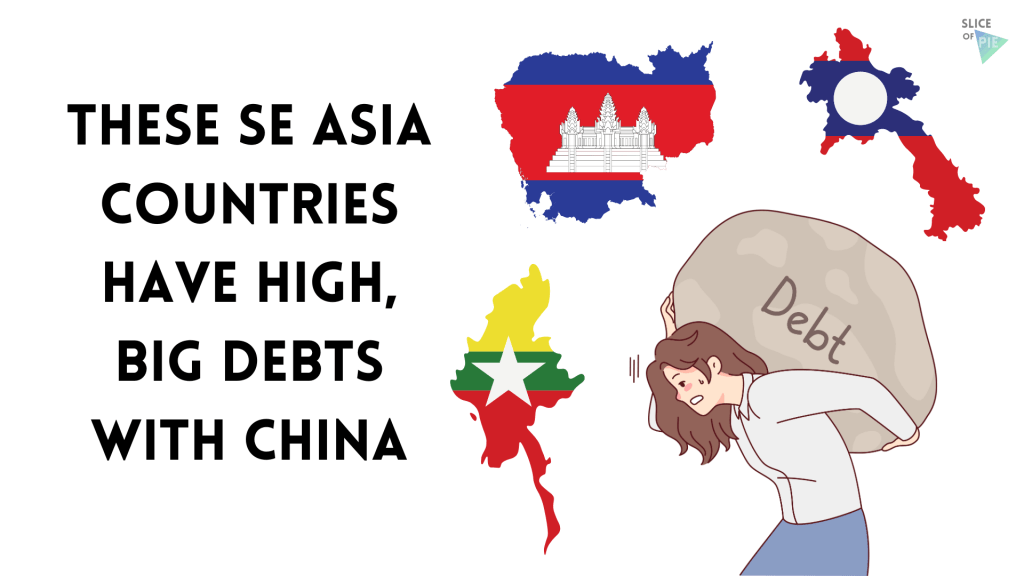
Will the same thing happen to Laos? Oh, but the plot thickens. Many Southeast Asia countries also borrowed from China. And China holds many of their government and private bonds and debt.
This article will explore 1) who has the highest debts with China, 2) what the countries are using them for, 3) are the investments fruitful 4) whether will they be able to repay, and 5) what will happen if they default.
Who has the Highest Debt to China in Southeast Asia? What Are They Using Debt For?
Laos and Cambodia.
Admittedly, the two richest economies Malaysia and Singapore do not have a breakdown of their external debt by countries. Hence, they are not included here.
However, the dataset from the World Bank is quite complete with data from Myanmar, Laos, Vietnam, Philippines, Papua New Guinea, Cambodia and Indonesia.
#1: Laos
Laos has the biggest external debt to China at US$5.3 billion in 2022, and it has grown tremendously from 10 years ago. It registered a compounded annual growth rate (CAGR) of 12.5% since 2012 (US$1.6 billion).
This was mainly driven by the China-Laos railway project estimated to be worth US$6 billion. It is 1,035 kilometers long and spans from Kunming in Southern China to Vientiane, the capital of Laos.
And China Export-Import (Exim) Bank loaned US$3.54 billion to the Chinese joint venture company in Laos for the project. That’s a big amount for a country that only has a GDP of US$15.4 billion in 2022.
#2: Cambodia
Moving over to Its neighbour, Cambodia. It registered an external debt of US$4.0 billion in 2022. Second spot in Southeast Asia. Like Laos, it registered a high CAGR of 10.3% since 2022 (US$1.5 billion).
Behind this is millions and millions of funding from China for infrastructure construction in urban and rural Cambodia. And Cambodia doesn’t intend to stop there. The Cambodian government has announced its intentions to procure funding for the US$4 billion high-speed rail connecting Cambodia’s capital to Thailand’s border and a US$1.6 billion expressway from Phnom Penh to Bavet.
#3: Myanmar
The country in eternal strife. Myanmar has US$2.5 billion in external debt from China in 2022. And it isn’t surprising considering that it shares borders with China.
However, its external debt has experienced a decline in recent years from a peak of US$4.4 billion in 2015. But if you are at war constantly, it’s not surprising that China doesn’t want to lend to you anymore. During Aung San Suu Kyi’s reign also, she has avoided taking on too much debt, as the government seeks to reform its government finances.
Are the Investments Fruitful for These Countries?
Place your bets! Do you think Chinese money has done more harm or good in these countries? Of course, as an economist, my answer is … well, it depends. But I am not going to cop out. My stance is that it has done more good, but only to a certain extent.
So, the theory …
To contextualize my answer better, I would like to explain the economics of investments, especially in developing countries. Let’s start with the basic equation
GDP = Consumption + Investment + Government + (Exports – Imports)
The higher the investment, the higher the GDP. Simple right? But the same can also be said for consumption, government and exports. Increase those components and GDP will increase.
For countries like Laos, Cambodia, and Myanmar, the reality is that consumer spending is just too weak to drive the economy. Salaries are too low. There are not many firms that are producing things and they do not have many jobs either. So, what can the government do?
They can increase government spending and build public companies. They provide jobs and salaries. But do they have the money? You see, the government makes money by getting taxes. But if the population is poor, there is no tax to be collected.
Enter foreign investment. Do you know what foreign companies like the most? Low taxes, cheap labour, lax regulations and abundant land. And many developing countries in Southeast Asia provide these.
Here’s how countries like Cambodia, Laos and Myanmar are benefiting from China’s lending and investments. China wants to build transportation infrastructure in line with its Belt Road Initiative, which will connect various countries with China to facilitate more trade.
Provide jobs to local people
Most of the projects they finance are railways, highways and ports. Firstly, these projects provide jobs to the local people in the country (mostly low-skilled unfortunately). When the locals have jobs, they have more money. They can spend on things, and companies can sell more. Governments in turn can collect tax.
Provide business to local companies
Secondly, the construction of these projects requires the products and services of local companies. These companies will be able to sell things like construction materials (concrete, steel, etc), food & beverage (everyone has to eat and drink), and equipment & machinery (cranes, trucks, etc). When they make more money, they can hire more people. See how the cycle works?
Improves the overall economy
Thirdly, it improves the overall economy. This seems like “Oh, such a general answer” but hear me out. Most of the projects being financed by Chinese money are transport infrastructure projects. And when you have trains, roads and ports, people can travel around.
They can find jobs in other areas that they can’t find in their current one. They can move around. And it’s not just themselves. Products too. Companies can now sell to other areas of the country and even export them overseas.
Evidence for and against this
In economics, we do have something to measure this. It’s called the multiplier. How much does one dollar of investment or spending benefit the economy as a whole? There is evidence for foreign debt-fueled investment that will benefit countries, but there is also evidence that too much debt and what type of debt conditions can reduce economic growth.
Evidence for:
- Foster, Vagliasindi, and Gorgulu from World Bank (2022): Public investment (government investment) has the highest multiplier values of around 1.5 times. It might carry higher returns in developing countries as they start from a low base.
- Stupak (2018): Core infrastructure investments (roads, railways, airports and utilities) produce larger gains in economic output.
- Glaeser and Poterba (2021): Public infrastructure has large effects on the economy in the long run.
- Leduc and Wilson (2012): Highway spending boosts GDP around 6 to 8 years after construction, with a multiplier of 3 or higher
Evidence against:
- World Bank: High debt can limit the ability of governments to provide fiscal stimulus, and weigh on investment and long-term growth.
The research on debt raises interesting questions about whether the debt taken on by these Southeast Asian countries is sustainable. And this is the subject of the next section.
Are They Able to Repay?
Statista did an amazing job in examining how sustainable the Chinese debt to each country’s gross national income (GNI). Basically, the higher the percentage, the more vulnerable the country is to Chinese debt.
Laos is the most vulnerable at over 30% to GNI, followed by Cambodia (10 – 25%) and Myanmar (5-9%). Papua New Guinea has about 1-4%. Vietnam, the Philippines and Indonesia only have less than 1%.
Laos is Distressed
Recently, there has been news that Laos is next on the agenda to default on its debts to China. According to data from the World Bank, Laos paid a total of US$759 million in interest to its China external debt in 2023, which represents about 14.5% of its total external debt to China. This was the highest it has been since the peak of 5.3% in 2018. It is becoming more unsustainable.
The IMF has also classified Laos as being distressed in its external and overall debt management. I would say Laos is in trouble now. And unless they do something serious to address their debt problems, they could be facing a tough road ahead.
Cambodia is Still Ok
At least, according to this consultation by the IMF. But the recent announcements and speeches by the Cambodian government indicate that they are going to borrow more from the Chinese. At this stage, its ballooning US$10 billion in external debt is 76% of its GDP. And 41% of that external debt is from China.
Thread lightly, or fall into a debt trap, where you spend most of your money paying off debt.
Myanmar is Unique
Myanmar is a unique case here. It is at war. So conventional economic analysis is not appropriate. Its external debt to GDP is only 17% in 2020. Not much to talk about risk here.
But China might be the one having troubles here. Even if it wants to ask for early payment, Myanmar is probably going to say no.
So, what if they can’t repay?
There has been a lot of news that China is backing a lot of these countries into a ‘debt trap’. Sri Lanka is a prime example here, where Chinese debt consisted of 52% of Sri Lanka’s external debt. At one point, Sri Lanka offered one of its major ports as payment for defaulting on Chinese debt in 2022. Hence, many western media accused China of trying to snatch ‘strategic assets’ in other countries.
But of course, that didn’t happen. China’s banks did come to the negotiating table and agreed in-principle to restructure some of Sri Lanka’s debt. And I suspect this negative perception and image of China intentionally borrowing funds to countries to trap them is fabricated mainly by western countries.
Firstly, the U.S. is not happy about China being number 1 soon. Of course, it’s not. It has been number 1 for almost half a century now. And China building railways and roads across Asia, Middle-east, Africa and South America? This didn’t sit well with the U.S. and most of Europe.
I mean I do think China has a political agenda of funding the Belt Road Initiative across different countries. But I will argue most western countries also have similar agendas. Everyone is the same. It’s just who’s got the money now and who’s bankrolling projects across the globe. At the current stage, China does.
This research by Himmer illustrates that there is no evidence to support that China intentionally burdens borrowing countries to gain strategic assets in Kenya, Maldives, Laos, Sri Lanka, Malaysia, and Djibouti. If anything, China has consistently agreed to some form of restructuring when countries can’t pay.
I don’t think anything major will happen in Southeast Asian countries that are indebted to China. But I am still suspicious about the BRI agenda by China. I get the commercial aspect of it in that China will gain a lot of trade volume with the countries involved. But the political one – eh, I think they are just trying to get countries to be on their side if a war breaks out with the U.S. That is actually a real possibility in the next 10 years.
Conclusion
What should you get from this? Debt is good and bad. For several countries in Southeast Asia, borrowing from China can help in crucial investments in the transportation sector. And this will provide jobs, business and help their overall economies.
However, being in bed with China comes with risk. There is a possibility that they can gain strategic assets in these countries but so far, China has not gone down that route yet.
 Slice of P.I.E