
If you like this content, consider subscribing to the website, or follow my LinkedIn and Medium.
You know what I like about fish? There’s just something about looking at them in their natural habitat that sets the heart at ease. I am very interested in taking up fishing but then my wife disagrees because of the sheer boredom of just waiting for a fish to bite. It doesn’t help also that I love eating fish and she doesn’t.
But I do know the impact human activities have on wild fish. That’s why I try to eat only farmed fish. However, recently, I read about how one-fifth of fish species are facing extinction on the Mekong River.
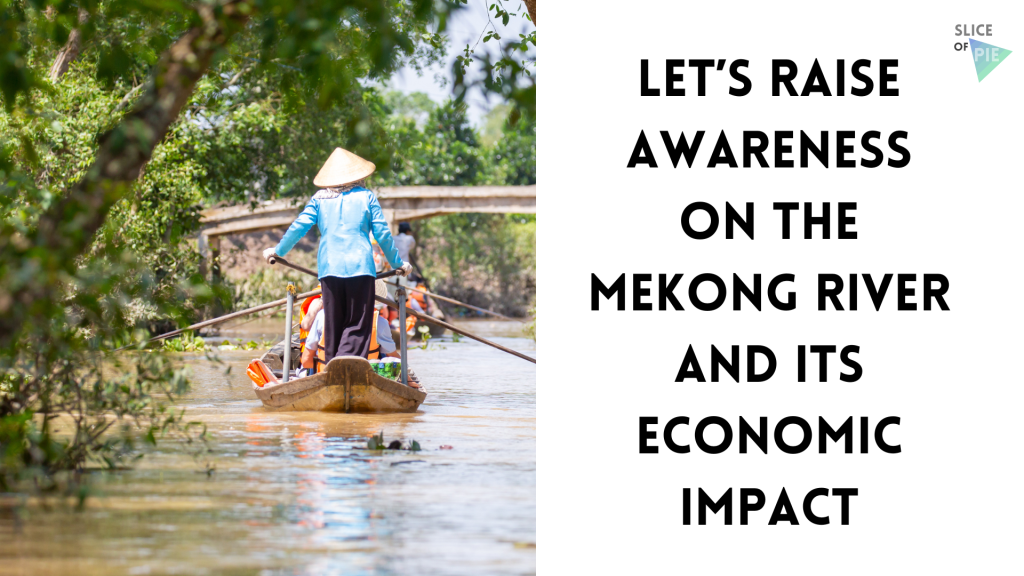
To be honest, I do care about the environment but don’t know how to contribute. But I do like researching and writing. So, I will raise awareness of this issue on the Mekong River for you to understand what are the deep-seated problems, its impact and what we can do about it.
The Mekong Hosts 15% of World Inland Catch with One-Fifth of Its Species Threatened
The Mekong has the most freshwater fish species at 1,148 after the Amazon and Congo rivers. But right now, about 18% of freshwater fish species are threatened with extinction.
The Mekong River stretches 5,000 kilometres, starting from Tibet, and flowing through Southwest China, Myanmar, Laos, Thailand, Cambodia and Southern Vietnam.
And there’s a reason why I decided to include this basic fact. Because it flows through different countries, hydropower dams are more detrimental if they are built upstream.
That is the main reason why most of its fish species are now threatened. You see, fishes need to migrate upstream to lay their eggs. And they also rely on nutrients flowing down from there.
Dams prevent these.
The Conflict Between Humans and Rivers Will Further Intensify for Energy
Let’s get this straight. Hydropower dams are a necessity for many of the countries specified above. The fact is this – these countries do not have many fossil fuel sources so they need other energy sources.
Hydropower dams are their solutions to their people’s energy demands. And energy is a crucial component of a country’s economic growth.
Right now, in Thailand and Vietnam, hydroelectric power consists of 10% of its total energy consumption in 2022. And both have plans to be net zero carbon by 2050.
The problem is that it will be difficult to do so without building more dams considering that they have to phase out fossil fuel eventually.
Because most of the Southeast Asia countries have not achieved developed economies status yet, they will be focusing on increasing economic growth in the next few decades.
And this will require even more energy from hydropower dams. Hence, it’s inevitable that countries like Myanmar, Cambodia, Laos, Thailand and Vietnam will build more dams in the near future.
Overfishing is Likely to Continue with High Costs of Living Also
About 60 million people rely on the river for food, water and livelihood. And, fishing is big in Southeast Asia. In 2022, Southeast Asia fishery production accounted for 22% of the world’s production.
With imported food costs skyrocketing in the past few years, this means that many people in Southeast Asia would have to rely on domestic fisheries to sustain themselves. And that means trouble for the Mekong River.
With 80% of the protein coming from fish, households living by the rivers will continue to be reliant on the river for sustenance.
According to data from Chevalier, Ngor, Pin, Touch, Lek, Grenouillet, and Hogan (2023), fish populations have declined by 88% from 2003 to 2019 in the Lower Mekong basin fishery.
This will likely continue doing so in the future.
What We Can Do About It
Look, I am not that smart. I don’t exactly the high-level policies that need to be implemented to preserve the Mekong River. Many people have talked about it.
But here’s what I think at the fundamental level, what we can do about it. Firstly, if there is a demand, there will be a supply. I am not saying to stop eating fish. But we can educate ourselves on what are the Mekong fishes that are facing the dangers of extinction.
If we know about them, then we can avoid eating them. If the demand stops, so will the catching.
I would like to say, ‘donate to the organizations that are doing something’, but I generally have a distrust for many of these organizations. Only about 20 or 30 cents of every dollar that we donate makes it to the people who need them. But no, please don’t donate money.
Rather, do something about it. For us in Malaysia, we can’t be going to these countries to help out. But we can scrutinize the development of hydropower dams in our country. For example, a big part of our country’s transition to net zero carbon actually rests in building more hydropower dams. This is especially true in Sarawak.
But if you are really lost on what to do (like me), just spread awareness of what’s happening in the Mekong River by sharing articles related to it.
I have compiled about 3 links here from World Wildlide Fund that could be useful:
 Slice of P.I.E