
It’s the mother of all days.
Happy Mother’s Day!
Well, it’s the time of the year when everything from roses to cards costs an arm and a leg.
But then, many women are opting not to be mothers these days. Interestingly enough, one fellow from King’s College London is blaming phones for why women don’t want to have kids.

Phones to Blame for Low Birth Rates?
Alice Evans, a social scientist from King’s College London, thinks that phones affect how we socialise.
When everything is at your fingertips, why go out and socialise? Being a couch potato sounds tempting if that is the case.
More people are isolated. Fewer people are talking to each other physically and building communities.
The United Nations projects that the population will peak at 10.6 billion by 2084. But why is that a problem?
You see, people are also living longer. And as they get older, they retire and don’t work. But governments still need to support them.
How do they do that? They need a big working population to continue paying taxes and contribute towards retirement funds.
And if the working population is getting smaller because people don’t want to have more kids, everyone is in trouble.

OPEC is Increasing Production because of some Naughty Boys!
My, my. Some naughty boys didn’t listen to their parents.
Kazakhstan and Iraq didn’t comply with their production quotas, and now, Saudi Arabia is trying to punish them by urging OPEC+ to increase production and push prices down.
Such is the politics of oil and cartels.
Brent crude oil prices have declined from US$74 per barrel in March to as low as US$58 in May.
And some investors are worried.
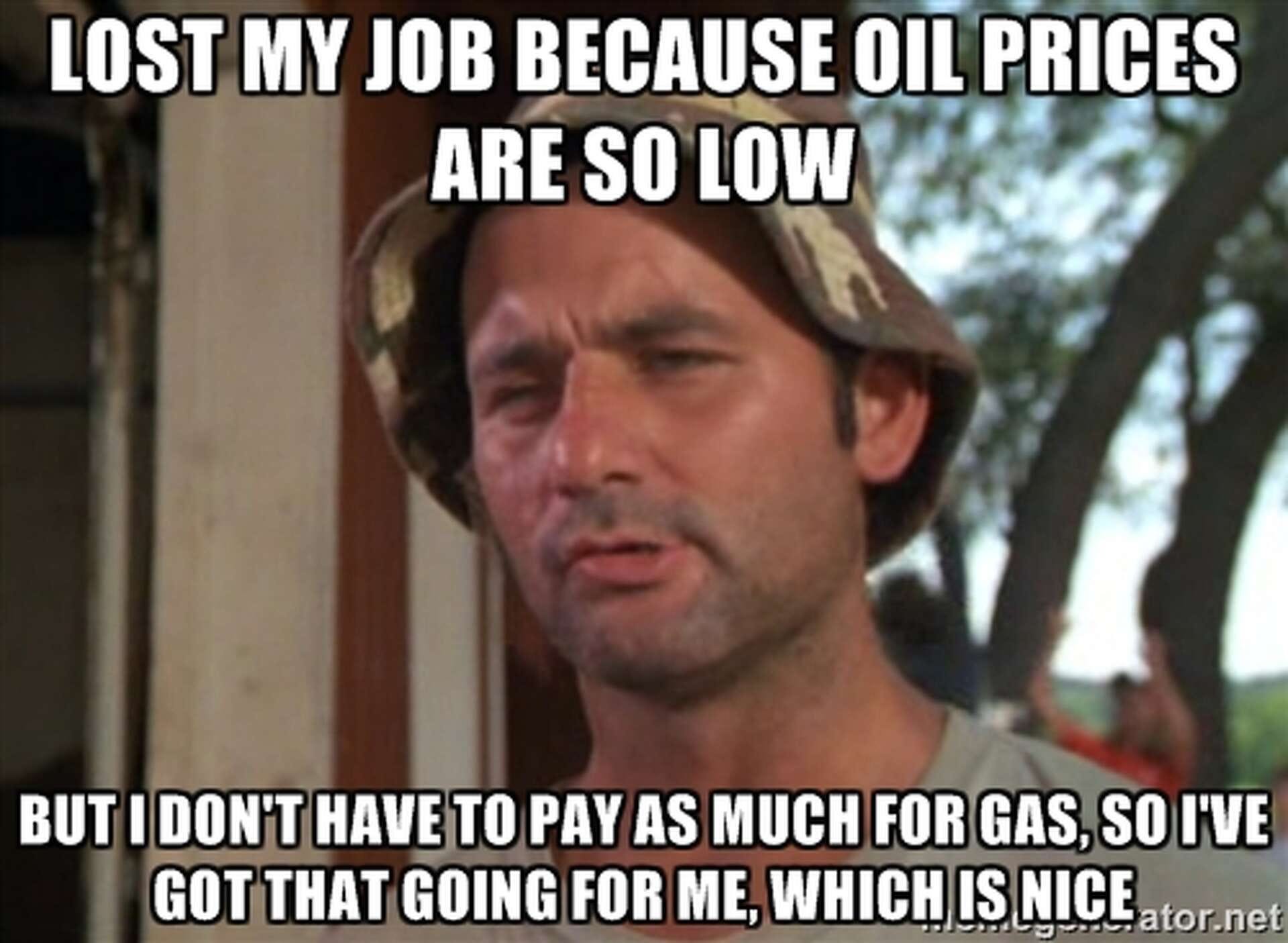
A decline in oil prices to below US$50 indicates one thing: the world economy is going into a recession.
Brace Yourself, Recession is Coming?
Jon Snow had to fight Nightwalkers at the Wall. But countries would have to fight an impending recession.
And the writing is already on the wall.
The U.S. just released its GDP results for 1Q 2025. It contracted by 0.3% and is the first and most important sign for the global economy.
Businesses and consumers in the U.S. are now holding back on their investments and spending as they think Trump tariffs would throw everyone into a recession.
The second sign is that Brent oil prices are nearing that psychological level of US$50 per barrel where investors are getting nervous.
Typically, a decline in oil prices shows that countries and businesses are demanding less oil to power their economies.
Lastly, we just need to wait for that fateful day for the final decision of Trump to reimpose tariffs on the world.
If he does, say goodbye to the markets for the rest of the year.

Why did the Chicken Cross the Road in Malaysia?
To lay some subsidised eggs.
Malaysia plans to reduce the subsidy on eggs by August 2025 as part of its efforts to ‘retarget subsidy for the poor’.
And also, the subsidies cost a lot of money – a RM2.5 billion amount from 2022 to 2024. The government doesn’t like the fact that many foreigners are taking advantage of the cheaper eggs (talk about xenophobia).
If you didn’t know, there is a ‘maximum price’ on eggs. This means that retailers can only sell them at about RM0.38 to RM0.42 per egg to you.
With the reduction and eventual elimination of the subsidy, you will probably pay about RM0.48 to RM0.52 per egg after July 2025.
Here’s how the chicken egg companies have performed since the announcement
- Leong Hup International: +3.2%
- Teo Seng Capital: +8.3%
- QL Resources: +1.0%
- CCK: -3.7%

Palantir: A Lesson in Mania and Hypervaluation
We have seen investor mania.
It started in the early 2000s for U.S. internet stocks called the Dotcom bubble. And then, during the pandemic, U.S. investors went crazy for meme stocks such as GameStop. Meanwhile, in Malaysia, everyone was all up in glove stocks.
And then, there’s Palantir.
The golden boy of software companies, Palantir, mainly provides software services built on also AI technologies to the military.
And then, last week, when it announced its financial results that exceeded expectations, investors went on a selling spree.
Palantir was down by 12% in a single day. Suddenly, many had cold feet.
Their concern? Valuations were crazy-high at 500 times the price-to-earnings ratio.
They think Palantir is a good company, but is it 500 times PE ratio good?
That’s on par with the levels that Nvidia had.
The lesson here? If you believe in the company, stay invested. But if you are just riding the mania, make sure you get off on the right train.

 Slice of P.I.E