
“Hey, can you do a face reveal?”
One of the comments I read on a popular faceless YouTuber channel.
It had 3,000 likes and was the top comment on that video.
Two weeks later, that creator announced that he was doing a face reveal on a YouTube post. He created a countdown notification, and many of his subscribers followed that.
I know it’s a he because he voices all of his videos, but never shows his face.
When it came to the face reveal, he wore a mask. Slowly, he pulled it down and revealed his clean-shaven, short-haired, boyish look.
It matched his voice.
The livestream comment section went wild, with everyone saying congratulations and how their expectations were exactly right or exceeded them.
He stayed and chatted with his subscribers for about 30 minutes, thanked them and exited the livestream.
The next day, he uploaded an edited video on his YouTube channel with the title “My Face Reveal”.
The video blew up. Views were 4 times higher. Subscriber counts increased by 50%.
His average views per video doubled, and so did his income.
But half a year later, he quit YouTube, citing the burnout and immense pressure of maintaining a clean public image.
These events are common nowadays.
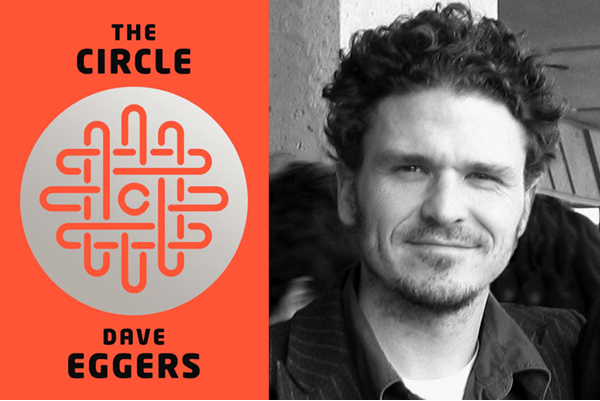
Continuing on my reflections on Dave Eggers’ book, The Circle, as part of Jared Henderson’s book club, I want to explore the whys and effects of the commodification of identity and private information in the modern world.
And why have we become obsessed with knowing more?
What Was Going On in the Head of Hers?
If you have not read the book, this might be a minor spoiler.
But this was what Mae Holland, the main character of the book, said at the side of the hospital bed of her best friend. She was unconscious, collapsed with stress and anxiety after an ordeal that affected her family. I won’t say what it is, but it was criminal in nature.
While this might seem like a friend who is concerned about her well-being, the lead-up to this scene will have you questioning the very effects of power.
Mae, at the end of the book, became a worldwide ‘live-streaming’ star. She dangled a camera by her neck and let the whole world see what she’s up to 24/7. She became an icon for many advocating for extreme full transparency with no privacy.
Through her viewership that went into millions, she became intoxicated with the power of the external world. Everyone knew what she was up to, what her beliefs were, and who her friends were.
In turn, she was showered with ‘love’ and ‘likes’ from all over the world. And her viewers thirst for every shred of information that she can show them.
Her entire ‘self’ turned into one that wants to know everything about everyone. If you have something that she doesn’t know, she wants to know. And she will use her power to do that.
At the side of her best friend’s bed, she pondered whether she could directly know what her best friend is thinking right now in her unconscious state, not from a place of caring but from one that is drunk on power to know everything.
The ending was chilling.
What was going on in that head of hers? It was exasperating, really, Mae thought, not knowing. It was an affront, a deprivation, to herself and to the world. She would bring this up with Stenton and Bailey, with the Gang of 40, at the earliest opportunity. They needed to talk about Annie, the thoughts she was thinking. Why shouldn’t they know them? The world deserved nothing less and would not wait.
The Power that Comes with Private Information
Lord Acton’s famous quote comes to mind.
Power tends to corrupt, and absolute power corrupts absolutely
Reading about Mae Holland’s ascent (or descent, depending on how you look at it) from a customer service executive to the face of the organisation called ‘The Circle’ is like watching someone go mad in power.
What started with good intentions devolves into an absolute necessity of knowing and sharing everything.
It’s what happens when someone suddenly comes into fame (or infamy) and gains a whole lot of attention.
Like a YouTuber, TikToker, Instagrammer or in general, influencers who commoditise their own private information for fame and fortune.
And there’s a big demand for them by the general public.
The more you share, the more views and likes. The more likely advertisers and sponsors want to work with you.
Digital likes and engagement turn into cold, hard cash. And companies love the hold these influencers have on their audiences.
A simple ‘shout-out’ could translate into millions in sales.
A simple private story on how they ‘relate’ to the products sends engagement flying.
Everyone in the world, including you and me, resembles Mae Holland.
What more of ourselves can we share with the world?
And if that is not enough, what more about other people can I know and share?
All in the name of getting validation and likes from people we have never met.
How Personal Branding is the Commodification of Privacy
“It’s all about personal branding”
8 years ago, this term seemed odd to me. Big marketers and social media personalities were chanting this mantra like it was the second coming of Jesus.
It’s not really about the product or services; it’s about the story behind them, and your personal relations to them.
Today, personal branding has become the core centre of everyone on social media and the internet.
I don’t know whether this is for the best or the worst.
I myself do personal branding to encourage people to read my articles and subscribe to my channel.
But I will always hesitate in talking about anything ‘private’ about myself and my family.
Though based on online trends and ‘success’ on social media, it seems like the more you share about your private information, the more followers you will gain.
“People subscribe to you for your personality and brand, not what your knowledge or core competencies are”
This was a common ‘advice’ on many successful people on the internet.
And thus, I see many share more and more about themselves, building up their personal branding and gaining a bigger audience.
I admit, I do feel envious about this. I am a small writer, writing to try to get more readers. Sometimes, I feel like I should just share more about myself and gain more readers.
But I can’t bring myself to do it.
I am fearful that one day, I might regret it. Strangers on the internet, commenting on my family and personal affairs.
I want to do it the ‘right’ way. Of getting so good at writing that I don’t have to rely on my personality or branding to get people to read.
But at this point, with no readers and nothing substantial that can support myself and my family, the path of commoditising my privacy becomes more and more attractive.
Mae Holland and I have a lot in common after all.
 Slice of P.I.E